


Like your drinks with a side of escapism? Modern-day tiki bars are tackling the trend with more nuance but just as much fun.
If your kind of happiness is a good bar with a great atmosphere, then tiki bars can surely only bring pure joy. Who could possibly resist their appeal? Whether these venues are completely OTT with fake palm trees, neon lights and wooden totems, all kinds of retro like the resort bars of old, or much more restrained with refined tropical vibes, tiki bars are havens for creative cocktails and a solid dose of escapism. Read: a very good time.
There’s a complex history here, though – something that newer venues taking up the tiki torch are being careful to consider. As we enter a new era of tiki, many are making conscious attempts to leave behind the stereotypes and homogenised cultures in favour of creating entirely unique worlds of their own. Below, we dig into tiki bars, where they come from, and where they’re going now.
The true roots of tiki are far from what’s seen in bar culture today. The word ‘tiki’ traces back to Maori origins, referring to sacred carved images of gods and deified ancestors. Meanwhile, tiki bars are an American concept that first popped up in the 1930s. Military expansion to places across the Caribbean and South Pacific gave American soldiers their first taste of these cultures and their exotic flavours. Rum! Coconut! Pineapple! Tiki drinks (and the rums from these parts of the world) have proven their brilliance, but it’s impossible to divorce the style that became known as ‘Polynesian Pop’ from its Indigenous heritage, colonialism, and the appropriation of terminology and iconography from places like Hawaii, Easter Island, Tahiti and Samoa. When publications like Newcity Resto have spoken to key Pacific Islander voices on the topic, the responses have ranged widely on the positive to negative spectrum.
The first tiki bar is often credited as Don’s Beachcomber in Hollywood. Founder Donn Beach (no coincidence, he officially changed his name) is renowned for creating the first tiki drinks – elaborate and theatrical cocktails he called ‘Rhum Rhapsodies’. Don’s opened in 1933, right as Prohibition Era ended in the US, so the timing was bang-on for people to get excited about a whole new subculture of bar life and style of drinks. Taking rum from the Caribbean, food from Asia, and imagery from the Pacific Islands, they gave it the moniker ‘tiki’, a romanticised interpretation created for Americans as a faux tropical paradise – a sort of ‘island living’. Now, with love for craft cocktails reigniting in recent years (and a serious boom for rum), tiki bars are seeing a strong resurgence.

Over the decades, lots of tiki bars were a reductive mash-up of cultures, but plenty have become more considered in recent times. Leading the charge are venues that blend a broad mixture of general tropical references, and many are even shifting their language from ‘tiki’ to ‘tropical’ – a respectful embrace and evolution of tiki-bar culture that’s working to avoid the stereotyping and baggage that’s accompanied it from inception.
Dre Walters of Sydney venues Old Mate’s Place and Huelo recently opened the tiki-style basement bar Old Love’s, which is distinctly lowkey. “We gave ourselves the brief of no tiki shirts, no glowing neon flights and no flowers, and instead looked at what would’ve been the first things you brought back from those Polynesian and Caribbean countries, and we decided to put those artefacts on the walls,” he says. While you can still expect to find ostrich-feather chandeliers, palm fronds and Polynesian-inspired art at Old Love’s, the venue is a lot more like a subdued island speakeasy – without a Hawaiian shirt in sight. “The beauty of tiki is that you have a lot of freedom with it,” Dre says.
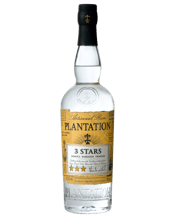
The lynchpin of tiki bars has always been rum – a spirit that was widely drunk by soldiers in the Caribbean and other rum-producing countries during WWII. Many returned home with a new love for this spirit, which was a lot easier to find at that time – and cheaper – than the usual vodka and gin due to war-related shortages and slave labour. It wasn’t long before more people in the West cottoned on to rum’s versatility and deliciousness in a whole suite of drinks, and tiki bars became places where rum took centre stage. The spirit featured in many different drinks, from refined classic cocktails to ice-filled tiki mugs topped with a feast of oversized garnishes.
Old Love’s pays particular homage to rum, not least through Dre’s self-published book on the subject. Yep, he loves the spirit so much that he wrote a whole book about it, which you can read in the venue. Dre says it was about educating people, especially those who think rum is simply Bacardi or Bundy, because there’s a deep history and much more to explore. As Dre says, there are so many incredible styles that offer a middle ground of flavour, while others, for example, are finished in sherry casks to absorb the distinctive tastes from the barrels. “Then there are rums that taste like mezcal, or that are quite raw and agricultural, and then you’ve got rum that’s quite romantic in the sense it’s been aged, with notes of fruit cake and vanillin,” he says.


Like Old Love’s, Tucano’s is putting their own stamp on tiki cocktails via the ‘aperitiki’ route – a fusion trend they saw come out of New York. “We wanted to combine the best elements of Mediterranean drinking with the fun and excitement of the tiki-style drink,” Ben says. “Rather than only using heavy rums, sweet liqueurs and dense fruit juices, we’re working with white vermouths, sherries and amaros, and while we do have an amazing rum selection, we also have vodka, tequila and other spirits, too.”
This approach carries over to their food, too, with chef Naomi Lowry, ex Biota and PIlu, winning people over with her Mediterranean-leaning menu of flavourful dishes that also draw from Pan Asian influences. It all stands up to the bright, lifted drinks on offer at Tucano’s – many of which are carbonated for extra freshness – and helps complete the atmosphere. “It’s about escapism,” Ben says. “Tiki bars were created in an era where people didn’t get to travel, so here, you walk through the door and you’re in another location. You step into another dimension and experience. It’s all about having fun.”



%20(1)?$dans-daily-web-image$&hei=900)
?$dans-daily-web-image$&fmt=png-alpha&wid=800)