NOW EXPERIENCING:A guide to the Rhône’s top areas
Learn|Wine 101|Shiraz|Wine Regions

A guide to the Rhône’s top areas


Read time 5 Mins

Posted 02 Aug 2022

By
Patrick Boxall


Scenery from the Rhone Vally in France

Where to find good-value, great-tasting wine in France’s Rhône Valley.
The Rhône Valley is one of the world’s most famous wine regions. Located in France’s south-eastern corner, with the Rhône River flowing lazily south to the Mediterranean, the region can be split into the Northern and Southern Rhône, each of which has its own rockstar producers, hallowed appellations and wines of distinctly different character. The Rhône is a big beast of a region, and it’s always changing, but if you’re interested in the wines and not sure where to start, there are several areas and styles to look out for to make your journey a little easier.
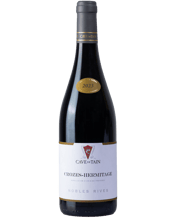
Northern RhôneThough Northern Rhône is responsible for a miniscule amount of the Rhône’s total wine production, it’s widely regarded as the spiritual home of syrah. It’s a style the rest of the world has attempted to emulate – few as successfully as Australia's Barossa Valley – but there’s something almost mystical about Northern Rhône appellations like Hermitage and Côte Rôtie that puts them in a class of their own. They’re known for making syrah defined by plenty of black pepper, with the outlying Crozes-Hermitage producing a juicier example that makes for a great-value buy. These are the most famous appellations within Northern Rhône, but there are also some not-so-hidden gems to look out for.
Saint-PérayThis appellation once rivalled Champagne in prestige and was highly coveted until the Phylloxera plague wiped out huge swathes of Europe's vines in the 19th century. The Saint-Péray that emerged from the disastrous infestation paled in comparison and the wines quickly fell out of favour; however, it’s now regained its reputation for making world-class white and sparkling wines, especially from the marsanne grape. Cave de Tain is just one producer helping Saint-Péray’s reputation recover, with their hand-picked marsanne coming from 40-year-old vines and showing elegant notes of peach, apricot and lemon zest, while the mineral, flinty finish is a nice reflection of the region’s terroir.
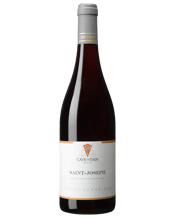
Saint-JosephSaint-Joseph is known as one of better-value appellations of the Northern Rhône. At their best, Saint-Joseph’s syrahs can rival the more expensive areas of the north, including Hermitage and Côte Rôtie, though the large area means quality can vary between producers and vineyards. It’s a relatively young area, having been awarded AOC status in 1956 after producing vintage after vintage of quality wines. With this new status as a driving force, Saint-Joseph grew until quantity unfortunately overtook quality. It wasn’t until the 1990s that a real effort was made to prioritise quality wines, but the efforts have been well rewarded in recent years as demonstrated by producers like Tardieu-Laurent. Their Vieilles Vignes (old vines) is a 100% syrah that’s expressive, mineral and smooth, aged for 12 months in new and old oak barrels.
Southern RhôneWhile Northern Rhône has its steep vineyards and spicy syrah, Southern Rhône is all about intense, fruity grenache, which is ably supported by syrah and mourvedre to make the region’s specialty: red blends. These wines can vary greatly, in terms of taste and content, with Châteaneuf-du-Pape representing the gold standard, though there are plenty of other great appellations producing both high-end and good-value wines.
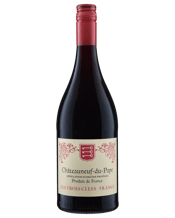
Châteauneuf-du-PapeThis is it – the OG of Southern Rhône wines. Translating as ‘New castle of the Pope’, Châteauneuf-du-Pape was France's first official wine appellation (1936), though the name refers to a much earlier period during the 14th century when the Catholic Church was moved to nearby Avignon. It’s one of the sunniest regions in France and its very mention sends shivers down the spines of many wine drinkers. Château de Vaudieu, which was built in 1767, produces a grenache-dominant style that reveals a blend of strawberry and cocoa bean flavours with notes of white pepper. It’s an excellent, reasonably priced wine that has potential to cellar for years to come.
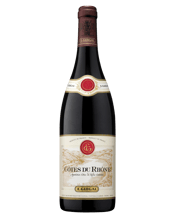
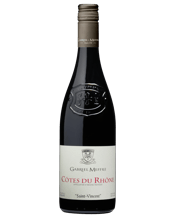
Côtes-du-RhôneThe Côtes-du-Rhône is your sweet spot for Southern Rhône wines. There’s a lot of value to be had here, with some really great wines being made at a fraction of the cost of something from, say, Châteauneuf-du-Pape. It accounts for around half of the Rhônes total wine production, and once again, red blends are the region's bread and butter. These blends tend to be really approachable and popular as a dependable midweek drop with dinner. Something like Gabriel Meffre Côtes du Rhône, which has aromatic black fruits and ‘garrigue’ (thyme and rosemary), is a great example – it’s juicy, a little spicy and won’t break the bank.
Bouches-du-RhôneThe Bouches-du-Rhône is an Indication Géographique Protégée, or IGP, which essentially denotes a wine region that has less restrictions on production than an AOC. While it may seem like these are somehow lesser regions, they’re actually some of the most exciting because the lack of restrictions means winemakers can experiment and break tradition. As a consequence, wines from Bouches-du-Rhône offer up fruit-driven red blends and a lot of value for buyers, like the grenache/syrah/carignan blend made by Le Grand Roi.
Want more on French wines? Take a tour with our guide to the key regions around the country
image credits: Jae Jun Kim