


A never-ending spirit? Sign us up. Bar Planet and Poor Toms give us the lowdown on the ‘mother stock’ that makes their Martini out of this world.
If you’ve found yourself out and about in Sydney’s Newtown, there’s no doubt you would have stumbled (purposefully or not) upon a little joint known as Bar Planet, a psychedelic mosaic of local life helmed by the Cantina OK! and Tio’s folks. Super popular with millennials and gen Z’ers, Bar Planet is famous for its down-to-earth hospitality, its quirky social voice and, for some reason, its bathrooms (see here). But what stands out to us, aside from its beautifully crafted David Humphries bar top, is the signature house Martini made with an evolving gin “mother stock spirit.”
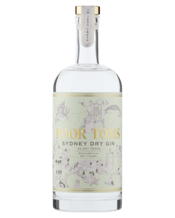
The idea of a mother stock, or infinity spirit or cocktail, intrigued us. What actually is it? Is it something we should (or even could) be trying at home? So, we chatted with Poor Toms’ Head of Innovation and Advocacy Sean McGuire, who has been working with Bar Planet on theirs since its opening.
“To the best of my knowledge, the concept first started to arise in the whisky-drinking community,” explains Sean. Back in 2012, popular whisky YouTuber Ralfy Mitchell released a video explaining what he called the “solera bottle” (also known as the “infinity spirit” or the “living spirit”). It’s kind of reminiscent of the solera system used to produce Sherry in Spain’s Jerez.
Basically, it’s a never-ending stock – never-ending because you keep adding to it. “In its simplest form, as people get to the end of their bottle, they would pour that last portion of liquid into another bottle,” explains Sean. “Repeating that process with the next bottle and the next, until eventually what you are left with is a blend of every whisky you have ever drunk.” The idea is that as you drink it and continue to top it up with different whiskies, it will develop and evolve into your own unique blend; one that could potentially be passed down from generation to generation, as you would a sourdough starter. And while it may have started with whisky, people like Sean have taken the concept into totally new territories.
Well, in collaboration with Poor Toms, Bar Planet has taken this idea of the infinity bottle but made it at bar scale. At Poor Toms and Bar Planet, they call this the “spirit mother stock”. Devised by Jeremy Blackmore of Bar Planet, the idea was to make something similar to a restaurant’s master stock. “Something that continues to develop and evolve over the lifespan of the venue, taking the idea of the infinity bottle to the next level,” Sean explains.
So, how does it work? Sean and the team at Bar Planet source interesting in-season ingredients they want to work with, find their corresponding or complementing second ingredient and distil it in a similar process to making gin. The first iteration was with cider apples and chamomile flowers. “Three months later, we repeated the process with blood limes and coriander seed. The resulting blood lime and coriander spirit was then blended into the last 20% of the cider and chamomile spirit, creating our mother stock.”
Since then, Bar Planet and Poor Toms have worked with mandarin, fig leaf, poor man’s orange and wine grapes, among others. This process will be repeated each new spirit run, creating a spirit that contains elements and flavours from every previous run. “It’s a completely unique spirit that will continue to evolve and develop in complexity over time,” says Sean. This unique gin-like spirit is then mixed with a matching vermouth, batched, chilled and poured from a porron (a type of theatrical Spanish decanter) at the bar to deliver their house Martini.
While it’s fairly illegal to distil your own spirits at home (you need a licence), the infinity bottle is a great way to recreate Bar Planet’s mother stock. And well, first things first, you need a vessel. This can be an empty bottle or you can treat yourself to a fancy decanter. Next, you need two bottles of spirits. “What and how much you add is up to you,” explains Sean. “Personally, I would recommend keeping a record of what you are pouring into your infinity bottle, and how much, so you have a log of what your blend contains.” It can also be done for any spirit you like – whiskey, rum, brandy, tequila or even gin. The sky’s the limit. Sean advises that to start, select two similar spirits, so if you’re using bourbon, stick to bourbon – introducing a peated whisky might throw off the balance and taste a bit strange. However, as Sean says, the beauty of the infinity bottle at home is the ability to experiment. But if you’re just starting out, stick to the basics first.
Or, if you really want to give a little small batch distilling a go, Sean says limoncello might be the place to look. “You could easily do something across different batches, or make citrus-cello liqueurs and create evolving blends from these.”
Alternatively, you could make infinite cocktail batches. Sean suggests cocktails with non-perishable ingredients (sorry Piña Coladas). But things like Martinis, Manhattans, Negronis and Old Fashioneds will work a treat. “For example, take an Old Fashioned – if you make them in batches at home, keep a bit of your last batch before making a new one,” explains Sean. “And with the new batch maybe switch up the bourbon, or maybe use a different bitter and blend that into your old batch. That’s just one way it could be applied to cocktails.”
And there you have it. Have a go at home to create your infinity spirit, have a play at forever-cocktails or get down to Newtown to try Bar Planet’s outrageously excellent mother stock Martini.





%20(1)?$dans-daily-web-image$&hei=900)
?$dans-daily-web-image$&fmt=png-alpha&wid=800)