NOW EXPERIENCING:Everything you need to know about absinthe
Learn|Spirits|Spirits 101|Cocktails

Everything you need to know about absinthe


Read time 2 Mins

Posted 04 Apr 2024

By
Lulu Morris


There’s no reason to fear the Green Fairy.

So go the words of Oscar Wilde: “A glass of absinthe is as poetical as anything in the world. What difference is there between a glass of absinthe and a sunset?”. You heard the man – when it comes to poetic drinks, absinthe is basically Shakespeare. Also known as the Green Fairy (or Kylie Minogue, for the Baz Luhrmann enthusiasts out there) thanks to its iconic colouring and storied past, there is a tonne of misinformation surrounding absinthe, most notably that it can produce an almost Class A drug-style high. Spoiler alert: that’s a total myth. 
What is absinthe?Absinthe is simply a flavoured spirit – not to be confused with a liqueur. Throughout 18th century-Europe, there was a broad trend of crafting medicinal elixirs from distilled spirits. Absinthe started out life much the same way, concocted in Switzerland some time around 1792 (the details are hazy on who was responsible), but it wasn’t long before it had seduced the hearts of the French. It boomed in popularity over the following century, particularly with the creative crowd of artists, musicians and writers. 
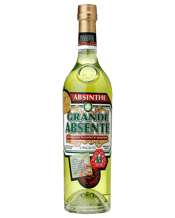
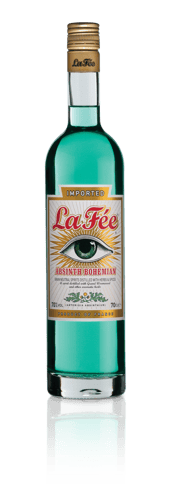
How is absinthe made?Drinks expert Simon Difford puts it well – “like gin, absinthe is essentially just flavoured vodka.” Those similarities also extend to the way absinthe is made. Starting with a grape or grain base spirit, the most common and traditional botanicals used to make absinthe are grande wormwood, Florence fennel and green anise, and to make it a truly authentic drop, hyssop, melissa and petit wormwood are also used. Just like gin, absinthe can be made one of two ways – cold compounded or traditionally distilled. However, distillation is the preferred and better method when making absinthe (and gin). The botanicals are macerated in the spirit before being redistilled a few times in a copper still. In the French fashion (circa 1840-ish), the liquid would undergo a second maceration to bring out those herbaceous flavours and release chlorophyll to turn the mix green. It’s worth noting that traditional French absinthe will have a light olive hue, while those with a more fluoro green appearance have generally had artificial colouring added.
Is absinthe illegal?Absinthe is certainly not illegal now, but it was pretty well banned throughout Europe and Northern America for a solid innings. Why? Because of a misguided reputation that absinthe had hallucinogenic, mind-altering effects. In fact, 19th century ads for the spirit pushed this as a key feature, leading to widespread bans throughout the 20th century. The confusion comes from absinthe’s very high alcohol content (roughly 50–70% ABV) and use of wormwood as a central ingredient. Today we know that wormwood, which contains thujone – a compound with a similar structure to THC – has no effect in absinthe whatsoever. In fact, thujone is also found in oregano, sage and some species of mint. Rest assured, this wormwood liquor does not, nor has ever, given anyone a high.
What does absinthe taste like?So, what does the Green Fairy taste like? Firstly, that high ABV means there’s a strong taste of alcohol. To stop it from being too overpowering, absinthe uses powerful botanicals like green anise and fennel to balance the flavour. The resulting spirit is powerfully bitter and kind of tastes like liquid licorice – if you’ve tried drinks like sambuca, ouzo or pastis, you’ll get the idea. If you don’t love those kinds of flavours absinthe may not be the drop for you, or it might be something you prefer just a teeny splash of in a cocktail. But a great quality absinthe will carry its other herbal flavours through as well. 
How to drink absinthe Absinthe has a strong bitter taste and generally needs to be sweetened or diluted to be palatable, so don’t go drinking it straight. Traditionally, it’s served two ways – the French and the Czech methods. Both involve water and a sugar cube, but there are key differences. In the French way, a sugar cube is placed onto a specifically designed absinthe spoon above a shot of absinthe. Ice-cold water is slowly poured over the sugar cube into the absinthe, causing the sugar to dissolve. The Czech way takes that same spoon and sugar cube, but doses the sugar cube in the absinthe first. The sugar cube is then lit on fire and drips into the absinthe shot below. Ice and water are added after to dilute. Remember, folks – absinthe is extremely flammable due to its high proof, so if you do want to try the Czech serving, we suggest taking the appropriate measures to be fire-safe (and you should probably YouTube some instructions first). 
Absinthe and cocktailsWhile the French and Czech methods above are the traditional ways to drink absinthe, they’re not the only option. Absinthe is used in many cocktails, either as a wash or an ingredient. What’s a wash, you ask? Well, it’s basically just coating the glass in a splash or two of absinthe and then discarding it, so you end up with the very faint taste of the Green Fairy when you’re sipping the drink. The most famous example of this is the Sazerac cocktail, a New Orleans classic. Other cocktails with absinthe in them include Corpse Reviver #2, a lemony gin and absinthe drink, Death in the Afternoon, which utilises sparkling wine, sugar and absinthe, and the Green Swizzle, a mix of rum, falernum and absinthe. Other than that, try adding a splash of absinthe to your Martini, or subbing out the white rum in your Mojito for this spirit’s fresh aniseed taste. 
image credits: Kayla May (photography), Bridget Wald (styling).