

Dive into this très famous region in France – the home of the world’s bougiest bubbles.
This world-famous region lies in the north-east of France, just an hour’s drive from Paris, or a 40-minute train ride away. Today, more than 16,000 growers make up the Champagne wine landscape, but this historic region has been making its renowned wines for, well, ever – recent discoveries suggest vines already grew there back in the 1st century. Interestingly, Champagne’s wines weren’t always bubbly – that came later – and instead, they were pale-pink still wines.
Part of Champagne’s luxe appeal comes from its centuries-long association with royalty. French kings would hold major ceremonies at the region’s Notre Dame Cathedral, and we’re tipping that other visiting royals and aristocrats from further afield discovered they quite enjoyed the local wines. Honestly, who doesn’t love a wine-region getaway? By the Late Middle Ages, Champagne had become the main supplier of wines for Northern Europe, and the region also benefited from its place on key trading routes. That was until the Hundred Years’ War raged between France and England, which impacted the region’s wine production. But once that was over, by the late 1500s, Chamgagne’s vineyards and wines were back in a major way.
Until the 1600s, bubbles hadn’t necessarily been the intended result in the region’s wines. In fact, producers tried to prevent fizz from occurring because they saw it as a fault – the bubbles came from a then-accidental secondary fermentation in the bottle (cue randomly exploding cellared wines due to the high pressure). Enter local monk Dom Perignon, who’s credited for propelling Champagne’s wine scene along (and fuelling many a rap lyric). Among other discoveries, he realised that blending wines from different sites across the region created something special, which sparked a much more considered winemaking process. It’s also believed he made the first white wine from dark grapes (blanc de noirs), which is the backbone of sparkling production.
Since then, Champagne producers have consistently and collectively refined their esteemed sparkling wines, from the early revelation of adding sugar during the traditional method process to more recent shifts like starting harvest earlier to ensure they pick the best fruit in the changing climatic conditions. Making Champagne is an intricate and labour-intensive process, both in the winery and the vines. The limited fruit is strictly regulated in terms of where it comes from and how it’s treated, and the region is also prone to frost and other risks. These are just some of the factors that help to explain a little about the cost and prestige of Champagne’s wines.
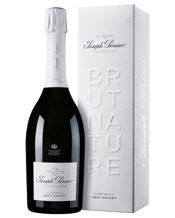
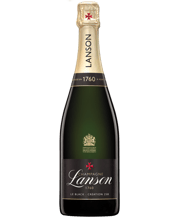
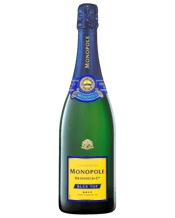
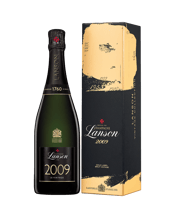
Made up of 370 houses, Champagne is home to household-name brands with a load of history, newer producers forging their own path, and grower-producers who take a smaller-scale artisan approach. Think Joseph Perrier, now almost 200 years old, or Lanson, with 260 years of wine production behind it, or Heidsieck Monopole, the region’s fourth-oldest producer, dating back to 1785. Meanwhile, others like Nicolas Feuillatte – established almost 50 years ago – are proving there’s a place for more than the old guard here, while innovation continues to be embraced right across the region.
The Champagne region stretches across 34,200 hectares in one of the world’s northernmost regions, with rivers and hillsides among this distinctive landscape. Its unique, cool conditions, combined with limestone clay and chalky soils, work to produce pristine fruit that nails the acidity and natural sugar levels. While several other varieties do grow here, the stars of the show are chardonnay, pinot noir and pinot meunier – the trio of grapes permitted in Champagne wine production.
Champagne is a complex region, divided into three subregions, five departments, four main growing areas – Montagne de Reims, Marne Valley, Côte des Blancs and Côte des Bar – and 319 villages. Some sites are tiny, but all come with their own set of growing conditions that suit certain grape varieties over others. It’s these various terrains, altitudes, soils and climates that firmly imprint the resulting fruit and wines with Champagne’s distinctive and celebrated characters.
Here in Australia, we have our own thriving sparkling wine scene, but we’re also pretty keen on Champagne. As a nation, we’re the sixth biggest consumer, popping open a whopping 9.9 million bottles in 2022. If you’re keen to explore the region’s wines – and despite the reputation, they’re not just for celebrations – there are a few Champagne houses to keep your eye on.
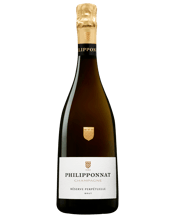
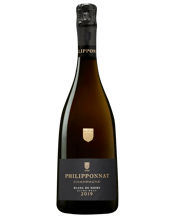
Family-owned Philipponnat has been turning out quality Champagne for more than 500 years. They’re right in the heart of the wine-growing areas of Aÿ, Mareuil-sur-Aÿ and Averney, and known for their premium sparkling styles. These range from their Non-Vintage and highlight Blanc de Noirs, made solely from pinot noir, to their Reserve Rosé, which is an excellent example of how versatile and approachable sparkling rosés can be.
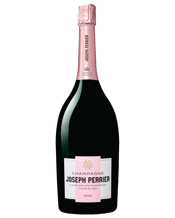
After almost 200 years of operation, Joseph Perrier remains a family business, now with the sixth generation at the helm. Cellar master Nathalie Laplaige has been in charge of the wines since 2017, making them one of the handful of Champagne houses with a female cellar master – once a very rare thing. Among their popular range is our top-seller, the Cuvee Royale Champagne Brut.
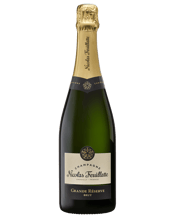
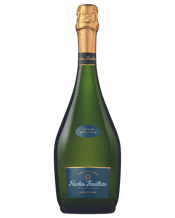
In a region full of so much history, Nicolas Feuillatte stands apart, having launched onto the scene in 1976. They have since become one of Champagne’s top brands – in France and beyond – so they’re showing how things can be done a little differently. That goes for prices, too, with the Grand Reserve Brut coming in well under than the average bottle of Champagne, as just one example from their quality range.
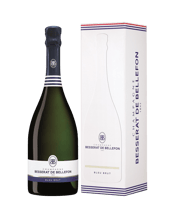
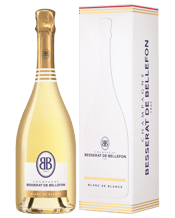
And if you’re after lighter Champagne styles, seek out 180-year-old Besserat de Bellefon. Based in Epernay, they consciously produce Champagne with less pressure and therefore softer bubbles. This results in a creamier, more delicate palate, making them bang-on for all sorts of food pairings. The ultimate dining companion, non?