Simple hacks for finding the best bottles on a budget.
It’s easy to buy expensive wine. Anyone can do it. At a higher price point, you’re almost guaranteed to buy a safe bet – tastes aside. Buying cheaper wine is harder, but the more you know, the easier it gets. This is why the gurus brag about being able to enjoy a bottle that costs less than a cocktail just as much as one that costs more than a week’s wage.
Even if you’re starting with level of knowledge that taps out at “I like white wine”, buying cheaper bottles doesn’t have to be a game of roulette. With our top tips, you can buy great wine for under $30, $20 and even $10.

Click image to shop
1. Look for lesser-known wine regions
Knowing a little about wine regions is an easy way to get more for your money. The most famous wine regions can demand a higher price tag. Internationally, that might mean places like Tuscany, Bordeaux, Burgundy and Champagne. Closer to home, Barossa Valley, McLaren Vale and Margaret River come to mind – although there’s still always plenty of value to be had in all of these regions, too.
Regions, and indeed countries, that are less renowned commonly give you more bang for your buck. Plus, it takes a long time for everyone’s general knowledge to update, so you don’t have to go especially obscure to follow this hot tip. Portugal, Spain and Argentina, for example, make some of the best wines in the world, but they don’t tend to cost as much as other places.
Sometimes, you just need to go one or two regions over. Paul Mas Chardonnay is a lovely, balanced French wine, but it’s from the emerging Languedoc-Roussillon region as opposed to chardonnay’s native – and esteemed – Burgundy. That makes it an absolute bargain French chardonnay at less than $20 compared to its more expensive counterparts.
Here on our shores, there are plenty of under-the-radar regions, and that includes Western Australia’s Great Southern. This vast region is home to many great varieties, with riesling right at the top of that list. A wine like Gold Turtle Riesling is an excellent example, delivering the hallmark pristine fruit flavours, and floral, citrus and mineral characters, all for less than $20.
Similar to those best-known regions, popular styles can sometimes come with a higher price due to the extra demand. The same goes for the more recognisable varieties, too. That leaves the more obscure grapes – the ones that are yet to be embraced by the masses – to sit in some very approachable price brackets.
As just two examples of white varieties, look for fiano, a bright, textural Italian white varietal, and albariño (alba-reen-yo), a very food-friendly Spanish white. Both are celebrated and delicious wines that can offer serious affordability. If you prefer reds, consider exploring that underrated all-rounder cabernet franc or those diverse blends of grenache, shiraz and mourvedre (GSM).
3. Pay a little more for a big jump
It might seem counterproductive to tell you to spend a little more, but, in these lower price brackets, a few extra dollars can make a huge difference. So, if you’re looking to spend between $15 and $20, you could get something with a little more depth and interest closer to $20.
The Tim Adams Clare Valley Pinot Gris is a good example. This South Australian wine is from a famous region and reputable maker – and it behaves much more like a wine in a significantly higher price range. Expect bright notes of apple, pear and tropical fruit, with a juicy palate with lots of great texture. This is still a bargain, but an absolute cracker, too.

Click image to shop
There are great people out there talking and writing about wine all the time. They aren’t always the stuffy, snobby conversations you might expect, either. There are a bunch of wine podcasts like Got Somme, and other insights from wine influencers on social media, that can give you great bottle recommendations while you scroll.
Find someone who you align with in terms of taste and talk who will increase your wine knowledge (and buying power) as well as give you a consistent stream of new releases to try. You could also *cough* regularly read Dan’s Daily, but no pressure.

Click image to shop
5. Let the bottle-o team help
Buying wine is less like buying eggs (the label says everything, just check they aren’t broken) and more like buying a car. You need to ask questions, and luckily Dan Murphy’s staff love nothing more than talking shop and recommending a great drop. When they ask if you need a hand, they really do want to help.
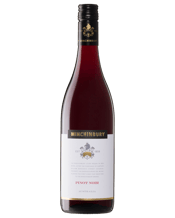
So, lean on the team in your local store to have a chat and discover something different. How else are you going to know that Minchinbury Pinot Noir is an easy, juicy Friday night wine that costs less than a croissant? Or that Zoncello Limoncello Spritz isn’t just a pretty bottle?
6. When in doubt, choose bubbles
If you have a budget of $10, know that bubbles are among the most food-friendly wines – and the most crowd-pleasing, too. They go with everything from snacks and a barbecue to Thai takeaway and homemade bouillabaisse (and so many other fancy dishes).
The Chancellor & Co Brut Cuvée Sparkling comes in under $10 and it’s a hot favourite among fans of affordable bubbles, much like the Jacob’s Creek Sparkling Chardonnay Pinot Noir. Clean, crisp and citrusy, these wines play nice in a Spritz or Bellini, or they’ll be lovely as an aperitif.

Click image to shop
Are you a My Dan’s member? Be sure to join (it’s free) to make the most of regular specials.
And for more great ideas, check out our top wines for under $10, dinner-party picks for $15 and award-winning bottles under $20.