


Take a quick trip to the heart of France's wine industry.
Welcome to Bordeaux, the capital of the wine world. The city’s cobbled streets have seen their fair share of history, but through the ups and downs one thing has remained an immovable pillar: wine.
It’s true – Bordeaux lives and breathes all things viticulture. Red wine runs through the locals' veins, but for the rest of us, the region can be a little confusing. Actually, it can be very confusing. There are different classifications, ranking systems and hierarchies, some of which have been in place since 1855 and continue to influence market prices of certain wines. It’s a lot to get your head around, but we’re going to take a little trip through Bordeaux to find out what’s what.
Bordeaux is split into two regions: the Left Bank and the Right Bank. These areas, which are key to understanding what's actually in a bottle of Bordeaux, are geographically separated by the Y-shaped confluence of the Garonne and Dordogne rivers as they empty into the Bay of Biscay.
Generally speaking, Bordeaux is best known for its red blends. There are some incredible white wines made here, particularly in Sauternes, but red rules the roost. Wines from the Left Bank tend to be dominated by cabernet sauvignon, which is blended with merlot to make big, powerful wines with a lot of cellaring potential, while wines from the Right Bank put merlot in the spotlight. These are blended with a little cabernet, resulting in a softer, fruitier style wine.
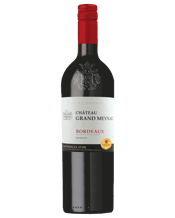
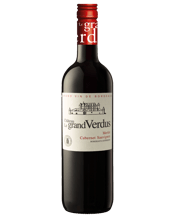
In the middle of the two, you’ll find Entre-deux-Mers – between two seas. It’s the no man’s land between the Left and Right banks, though no man’s land probably isn’t the best way to describe it. The subregion has a number of prolific producers and is where a lot of good-value Bordeaux can be found, including Bordeaux Supérieur, which marks the best wines coming out of Entre-Deux-Meurs. Château Le Grand Verdus produces a terrific example that makes the most of the local microclimate, giving off fragrances of red fruits, exotic spices and liquorice, with a real richness and depth.
Head north out of the city, along the Garonne River, and you’ll soon reach Bordeaux’s famous Médoc region. Before you know it, you’ll be surrounded by sleepy villages, endless vineyards and fairytale castles from another era. The Left Bank is home to some of Bordeaux’s best-known appellations, like Margaux, St-Julien, Pauillac and St-Estèphe, which lay claim to internationally renowned producers including Château Latour and Château Lafite Rothschild.
The wines from these appellations can come at an eye-wateringly high price – we’re talking over $1000 a bottle – but fortunately there are plenty of high-quality wines up for grabs at much more affordable prices. The trick is to search out the Left Bank's lesser-celebrated appellations; places like Pessac-Léognan and Graves, which are phenomenal wine-producing areas in their own right.
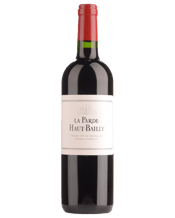
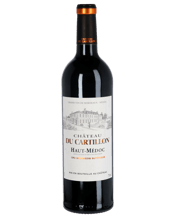
Take producer Château Haut-Bailly, for example, whose Pessac-Léognan wine is a balanced blend of merlot and cabernet sauvignon with a tiny bit of cabernet franc for good measure. It’s been widely praised as smooth, gorgeous and feisty, which is really everything you’d want in a Bordeaux, and it comes at a very reasonable price. The same can be said of Château du Cartillon's Haut-Médoc Cru Bourgeois, which is made between the famous Margaux and St Julien appellations. Its blend of merlot, petit verdot and cabernet sauvignon is supple, elegant and silky, with notes of red fruits, cocoa and licorice.
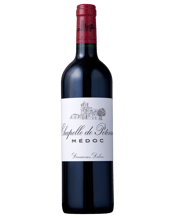
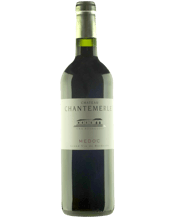
But if you’re wanting to try a wine representative of the pure Médoc style without breaking the bank, something like a Chapelle de Potensac Medoc is the answer. Made by Château de Pontesac, it’s predominantly merlot and cabernet sauvignon with dense, spicy tannins and a lot of depth. It’s a pure, powerful wine, something that will age nicely for a number of years.
Bordeaux’s Right Bank incorporates all the wine-growing areas north of the Dordogne River. Pomerol and St Emilion are the heavy-hitting appellations here, easily rivalling the lauded producers across the river, but there’s a wide variety of top-notch wines to be found across the region. Pomerol is a particularly interesting plot of land because it’s tiny compared to Bordeaux’s other appellations, with supply and demand driving up prices. And while you may well be in a position to purchase an $8000 bottle from Château Petrus, us mere mortals will have to make do with the Right Bank’s thankfully large variety of affordable red blends.
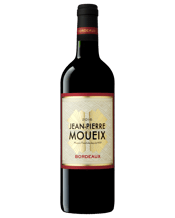
Jean-Pierre Moueix makes a great entry-level Bordeaux typical of the Right Bank, blending merlot with a small amount of Cabernet Franc. It's intense and complex, with notes of cherry, strawberry and tobacco as well as smooth, silky tannins. It’s powerful yet elegant, a real reflection of the immense care taken by Bordeaux winemakers.
To enjoy a taste of Bordeaux without leaving your home, shop our full range of Bordeaux vintage wines – from both sides of the river – online. Alternatively, take a little adventure to your local Dan's and chat with our Wine Merchants about the incredible history of Bordeaux and its wines.






%20(1)?$dans-daily-web-image$&hei=900)
?$dans-daily-web-image$&fmt=png-alpha&wid=800)