NOW EXPERIENCING:How do they make Guinness so creamy?
Learn|Beer|Craft Beer|Stout

How do they make Guinness so creamy?


Read time 2 Mins

Posted 27 Jun 2024

By
Lulu Morris


An illustration of a dark nitro beer with a frothy head

Take a closer look at the world of nitro beers. 

What is the marker of a well-poured beer? Is it how much liquid is physically in the glass? Is it how cold it’s coming out of the tap? Nah, it’s all about that head, baby. That beautiful, smooth top layer of a well-poured beer. Friends, is there anything better? It’s kind of like the chocolatey foam layer of a cappuccino (the superior coffee, in this author’s opinion). Froth worship is doubly as important when it comes to nitro beer – it’s the crowning glory. Imagine a lack-lustre head on a Guinness – we can hear the distant cries from Ireland already. But what is a nitro beer? And why is it so different from other beers?
It’s all about the bubbles, baby

If you’ve ever had a Guinness, you’ll know what nitrogen does to the taste and appearance of a beer. That fine, smooth, almost silky top is the result of nitrogen being pumped into the liquid. Guinness first adopted and pioneered the practice in the late 1950s to not only inject a bit of intrigue to the flavour, but also to help with consistency. Let us explain.

Before nitrogen, breweries often relied on bars and venues to finish off the ferment of their cask ales, but, as you can imagine, people aren’t so reliable and brews can get ruined by human error. So, to solve this inconsistency, Guinness looked to nitrogen.

 

Alright, so how does it work?Onto the sciency stuff – please bear with us (we dropped science in year 10). Essentially, nitrogen and liquid do not like each other. What we mean by that is nitrogen is super insoluble in liquid. So, to get the pesky thing to dissolve, you need two things – pressure and cold. If you are in a bar that serves a nitro beer like Guinness on tap, they’ve either been nitrogenated and then pressure-sealed in kegs or in-line from the source. It’s then the job of restrictor plates to push the beer through little holes, allowing the nitrogen gases to escape very quickly, thus giving it that wonderful foam and marbly effect when first poured in a glass.  
What’s the difference between nitro and regular beers?The big difference between a nitro beer and a normal beer is the amount of carbon dioxide (CO2) they use. Nitro beers still use CO2, but are mostly made up of nitrogen – about 70% – whereas normal beers use CO2 exclusively to carbonate their beers. CO2 bubbles are much bigger, and nitrogen bubbles are very, very fine – giving the beer a frothy, almost creamy head.
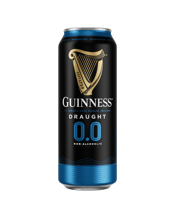
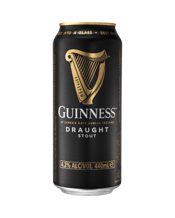
How does it work in a can?Guinness's innovation doesn't just stop at draft nitrogen tech, it extends to their canned brews, too. Firstly, they pressurise their cans, then they add a widget that houses all the nitrogen so when you crack the top of a Guinness can, you release that nitrogen and the gas escapes. When you pour it out, it’ll have that same lovely cascading bubble effect in the glass. Clever, huh? Nowadays, a lot of producers just get better at dosing and pressuring their cans and don’t use the widget, but we reckon it’s pretty cool anyway.
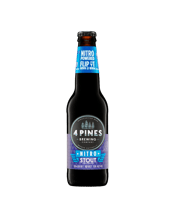
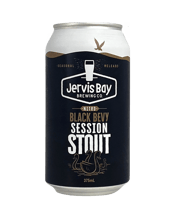
Is Guinness the only nitro beer? While Guinness is the most famous nitro brew out there (and for good reason, it’s delish) there are heaps more fun and scrumptious brews to try in the category. Things like chocolate nitro stouts, oat nitro stouts and even coffee nitro stouts are delicious examples. And increasingly, not all nitro beers are dark either, with some lighter-hued crafty contenders. You can have a squiz at the collection we have at Dan’s here.
image credits: Jae Jun Kim (illustrator)