


No, they're not just cordial. The secrets behind no- and low-alcohol tinnies, wines and G&Ts.
If you’ve recently picked up zero%* alcohol tinnie or wine, or maybe even a gin-less G&T, you’ll notice something’s changed. There’s never been a better time to enjoy a zero%* drink. A wave of clever newbies (and some seriously innovative OGs) have created a boom in new (and actually delicious) options.
But how exactly are non-alcoholic drinks made? Witchcraft? Science fiction? Turns out it’s neither (or is that what they want us to think?!). It’s just good old-fashioned hard work from forward-thinking producers who knew it was possible to create top shelf zero%* drinks without sacrificing taste.
When it comes to making non-alcoholic drinks, there’s more than one way to get to zero (technically not more than 0.5% alcohol). With that in mind we reached out to some local producers for the inside scoop on how they create their zero%* babies. From beer, to wine, and even spirits that aren’t quite spirits, below we find out how they combine flavour and freedom.

Here’s something you probably already knew: winemaking is a fiddly business. Wine’s a delicate creature and the smallest change in the elements can have big impacts on flavour. That makes crafting non-alcoholic wine a particularly tricky task. But that hasn’t stopped more than a few winemakers from stepping up to the challenge.
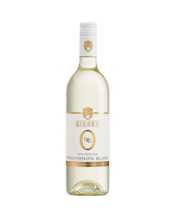
For their award-winning 0% Sauvignon Blanc, New Zealand label Giesen utilises what’s known as ‘spinning cone technology’ to gently remove alcohol and capture the wine’s aroma. “The initial winemaking is exactly the same as our regular wines. They’re fermented the same way, and blended the same. We then remove the alcohol using a spinning cone,” explains Duncan Shouler, Giesen’s chief winemaker. The spinning cone separates the wine into three elements: dealcoholised wine, alcohol, and aroma. From there it’s as simple as mixing the de-alcoholised wine and aroma back together and then adding a natural protein to recreate the body and texture that is removed with the alcohol.
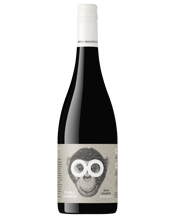
A different method for removing the alcohol from wine is by using a distillation process. South Australian wine label Funky Monkey uses distillation across their range of premium wines from vineyards in the Adelaide Hills and McLaren Vale, like this Pinot Noir. “This distillation process is a new technology, which has only been available in Australia for the last six months,” says winemaker Corey Ryan. “We employ a low temperature, high pressure methodology to gently remove the alcohol from the wine.” It’s that extra gentle approach that ensures the wine flavours and characters are minimally impacted.
Water, starch, yeast and hops – combine those four simple ingredients in the right conditions and the correct order – and hey presto, you’ve made beer. Fundamentally, brewing beer is a pretty simple process, but by tweaking those four elements you can create thousands of different beers. So how exactly does the recipe change for zero%* beers?
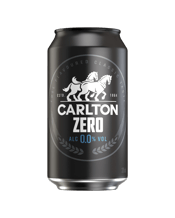
When creating Carlton Zero the answer is: not much. “The brewing and fermentation processes follow the same stages as our traditional beers, but the alcohol is removed through a gentle separation process after fermentation,” explains Stephen Exinger, Group Head of Science and Technology at Asahi Beverages. Removing the alcohol at the end (the science-y name is dealcoholisation) means Carlton can create a full-bodied brew through the exact same process as their other premium beers – right up until the last step.
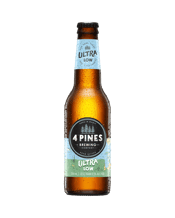
At Manly’s 4 Pines Brewing Company they’ve opted for a slightly different method. Instead of removing alcohol at the end of the brewing process, they stop alcohol from ever being formed in the beer. “Our 4 Pines Ultra Low is created through a restrained fermentation. It’s a unique alteration in process where we’re able to reduce the fermentability of the sugars and limit the potential for yeast to convert them into alcohol,” says 4 Pines Head of New Beer Development and Innovation, Simon Lew. The result is a subtle clean malt character with balanced bitterness and the same complexity that you’d expect from regular beer.


Yes, you read that correctly: spirits with zero%* alcohol. It’s a relatively new category of drinks that’s popular with anyone chasing the same full-bodied botanicals and flavours of distilled liquors like gin and whiskey, but without the high alcohol content.
One of the most talked about non-alcoholic distillers is Lyre’s, who’ve been at the forefront of the craft. Their lofty goal is to craft non-alcoholic spirits that taste just like the classics they pay homage to – and their popularity in the space speaks volumes of their success in doing just that.
To create their complex flavours Lyre’s carefully study and identify the distinct aromas, tastes and visual qualities characteristic of well-known spirits. “We source the finest all-natural essences, extracts and distillates from around the globe to match this flavour architecture,” says Lyre’s Global Flavour Architect, David Murphy (what a job!). A small amount of ethanol is used at the very early stages of the process to extract the most deliciousness possible out of these premium ingredients, but there’s no reliance on ethanol as the main flavour carrier – instead, Lyre’s have their own top-secret, non-alcoholic base liquid that forms the bedrock of the final product. That means that while there are trace amounts of alcohol left behind, it’s less than just 0.5%.
When it comes to alcohol content they certainly differ from their full-strength cousins, but there are still other similarities. “From a development perspective there is just as much time, care and sensory evaluation that goes into the assemblage of these different flavours as any fine wine, liqueur, gin or whisky,” explains David.
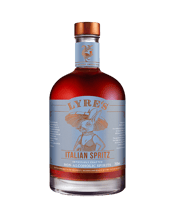
For a zero%* spirit to be worthy of your time it can’t just hold its own against the traditional alcoholic version – it needs to be more interesting. Lyre’s hold this first and foremost across their range, where zero%* spirits like their Italian Spritz aren’t just mimicking the classics, but making them distinctly their own. And that’s how you can whip up a non-alcoholic cocktail with the kind of complex flavour that rivals the hard stuff – something that anyone who’s suffered through the old school sugary mocktails of the past will definitely appreciate.



%20(1)?$dans-daily-web-image$&hei=900)
?$dans-daily-web-image$&fmt=png-alpha&wid=800)