


The premise might sound daunting, but pairing whisky with food is as simple as it is luxurious.
The only thing we at Dan’s Daily love more than a fine drink is pairing it with great food. We’re always going on about it, from wine and food basics to busting myths about wine and spicy food, searching for the best Italian dish matches and even pairing food to the different grades of sake. So yeah, you could say that pairing drinks and food is kind of a specialty around these parts.
One theme that constantly emerges in our explorations is the breadth of quality pairings beyond the obvious classics. Sure, wine is a worthy go-to (and you won’t catch us turning down a good wine pairing), but there are so many unbelievable flavour combinations out there, especially if you’re looking to dial up that at-home luxury. It’s in this spirit that we say to you, dear friends, that if you’ve been sleeping on the idea of matching whisky with food, you’ll be pleasantly surprised at how well this double act works.
Next time you’re looking to impress your friends with a plush, home-cooked dinner-party feast, don’t save the whisky for an after-meal nip. Make it part of the occasion by matching your dishes to a few drams instead of reaching for those tried-and-true wines. Even better, take your pick from The Balvenie range of Scotch whisky – they’ve been doing it since 1892 and we’re genuine die-hard fans of these absolute artisans. Each course – entree, main and dessert – can be transformed by a great whisky pairing. With a little help from the Balvenie experts, here’s exactly how we’d do it.

According to Joey Chisholm, expert brand ambassador for The Balvenie, there are a few reasons why wine is usually a go-to for food matching. “Traditionally, white wine equals seafood or chicken, and then red wine would equal beef or darker protein,” he says. “And that just comes down to the tannic structure and the flavour profile of that wine.”
While whisky is a different beast, its potent flavours – like sweetness, oak or spice – and higher alcohol content actually make it a perfect candidate for food matching. Here, the rules for pairing whisky and food are no different than if it was wine or beer. You can look for common flavours or textures as a starting point, or you might match whisky and food based on characteristics like the weight or power of each component. “We treat pairing whisky just like wine,” Joey says. “It might be quite a light protein or a light vegetable you want to highlight, so maybe you look to a lighter, more floral style of whisky to pair.”
Generally, whisky as a food pairing is served neat – that is, the whisky by itself or maybe a few drops of water – but you can get creative with cocktails or other servings, too. However you serve it, though, there are a few routes to take, like drinking the spirit first to set a whisky-led flavour profile, or having both at the same time – Joey suggests trying a few drops of whisky on a fresh oyster, if you’re interested in this route. Having tried this recently at home ourselves, we high-key agree. Or the more common approach is taking a sip of whisky after a bite of food.
“You probably want to go food first, then whisky, depending on what you're trying to pair,” says Joey. “That really works for dessert. When you've got a nice, creamy custard, you want to have that before the whisky because then your palate is slightly different.”
You can, of course, use any whisky as a starting point for food pairing, but Scotch producer The Balvenie is a food-focused distillery and really where we’d recommend starting a pairing journey. As one of the few distilleries in the Scottish Highlands that still grows and malts a portion of their own barley, their house style is a little rich and creamy, with honeyed and cereal notes across the spectrum that lend well to a range of food pairings. Recently, The Balvenie has been working closely with chefs like Lennox Hastie of Sydney restaurant Firedoor, matching whiskies with the sorts of smoky, charred dishes that Lennox has become renowned for.
“His passion is cooking over charcoal, so he likes to explore different ways to cook food and different ways to express the flavour of food,” says Joey. “He likes to showcase his style of cuisine slightly differently, and using different techniques in his cooking methods and showcasing whisky is part of that as well.”
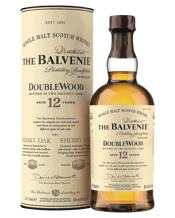
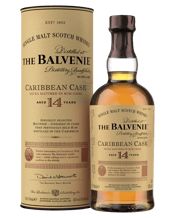
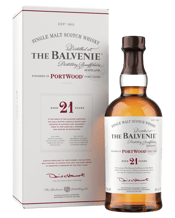
To get you started on your dinner-party pairing journey, we recommend beginning with a few drams from The Balvenie, each with some subtly different characteristics to give you room to move. There’s the flagship DoubleWood 12 Year Old, aged for 12 years in ex-bourbon American oak and finished for nine months in ex-oloroso sherry casks to bring complexity and richness. You could also consider the 14 Year Old Caribbean Cask, a whisky finished in Caribbean rum barrels for a spicy, toffee character, or – for something truly luxurious – the 21 Year Old Portwood has aged complexity and power on its side.


Entree
If you want to show your guests you’re not messing around, break some rules with a whisky and oysters to start the meal. “The Balvenie 12 DoubleWood is the perfect pairing with oysters in that you're balancing the salty and the sweet, and a little bit of extra alcohol elevates that beautiful brine,” says Joey. Extra guest-impressing points if you add a few drops of the whisky to the oyster itself before serving.
Otherwise, follow Lennox Hastie’s lead to start the evening. Here, Joey says the Firedoor chef’s pairing of smoked trout – which you might serve with blinis or in a dainty tartlet on your own menu, for example – with the 14 Year Old Caribbean Cask worked a treat. “The Caribbean cask has this really beautiful kind of dry spice, tropical, pineapple notes and it pairs really well with trout or some meatier fish because it has that rich spice, but it’s still light and bright and not overpowering.”


Main course
If you’re planning on sticking to one whisky across a meal, the DoubleWood 12 Year Old might be your ideal wingman. When it comes to the main course, this iconic dram works with a range of flavours and cuisines, but Joey has a favourite dish in mind. “It has a vibrant, vanilla and citrus note, but it also has that beautiful, spicy sherry note as well, so it can pair with a lot of things. I like it with classic Peking duck – duck pancakes – because that beautiful hoisin and that spice work really well side by side.”
For the spicier, tropical flavour profile of the Caribbean cask, you might want to think a little bigger. “Beef Wellington would work really well,” Joey says. “You've got that really rich steak inside with that mushroom duxelle. The intensity of the earthy notes would really pair well with the tropical Caribbean cask because there’s a bit of spice and a bit more intensity in there.”


Dessert
A classic dessert – particularly in the French culinary tradition – is cheese and, frankly, this is one area whisky particularly shines. If you’re looking for an excuse to serve something special like the 21 Year Old Portwood, cheese is your friend. “Portwood stands up because it's quite a bold and really intense whisky that pairs well with some beautiful cheeses,” Joey says. “A nice, creamy brie or a French-style camembert is really stunning – that creamy texture offsets it because the port balances everything out.”
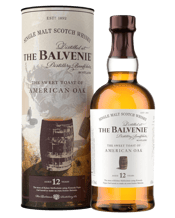
And, for one final idea, Joey says it can be worth breaking out a different whisky from The Balvenie – the 12 Year Old American Oak, ideally mixed as a Mandarin Highball – which pairs up perfectly with a toasted marshmallow. Gather your mates, head to the fire pit, and get a-roasting. A sweet treat and special dram to end it all and your guests will remember the moment – we promise.