

And, most importantly, what’s the best way to drink them?
A man crawls out of a hot desert after a day in the baking sun. Parched is an understatement. An inch from total dehydration, he stumbles on a tiny kiosk selling drinks and he croaks something that sounds like ‘water’ at the attendant, praying they’re not a mirage. “Still or sparkling?” comes the cheery reply. “And will that be mineral water, soda water, club soda or tonic water, sir?” As he promptly withers away, the desiccated man wonders what we all sometimes find ourselves thinking: ‘When did water get so complicated?’
For the most basic sustainer of life on our planet, there sure is a lot to know about water. And while soda, club, tonic and mineral waters are all pretty similar (you could say they’re variations on a theme), there are some key differences worth knowing, whether you’re taking your Ranch Water game up a couple of levels or just hydrating in style. We have the breakdown below.
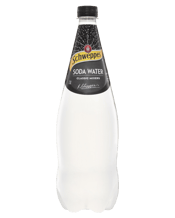
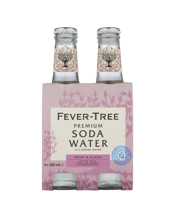
What is it? Soda water is just carbonated water. That’s it. The Americans tend to call it seltzer (not to be confused with hard seltzer) but, here in Australia, the most basic sparkling water you’ll find is almost always called soda water.
Some history: The novelty of sparkling water has probably never been apparent for most of us, but there was a time in history (almost all of it, actually) when sparkling water only bubbled up naturally from the ground (see mineral water below). That was until around 1772 when an Englishman named Joseph Priestly, inspired by the bubbly beer of his neighbouring brewery, sought to capture the gases responsible for making liquids fizzy – gases that were supposed to give water healing properties.
Joseph mixed chalk and sulfuric acid and caught the resulting gas – our good friend carbon dioxide, AKA CO2 – in a, uh, pig’s bladder. He successfully used the gassy bladder to make sparkling water, publishing his findings under the evocative title Directions for Impregnating Water with Fixed Air. The subtle flavour imparted by the bladder was, understandably, a turn-off, and a series of replacements cropped up over the next few decades as soda water began its ascent to the big time.
How to use it: With its pleasant effervescence and neutral flavour, soda water has long been a barroom staple. For mixing purposes, use soda water in instances where dilution is a good thing or where you don’t need the fizz to bring the flavour. A drink like a Tom Collins, for example, uses soda to dilute a powerful set of flavours (sugar, lemon juice and gin), leaving us with a fresh and summer-ready sipper.
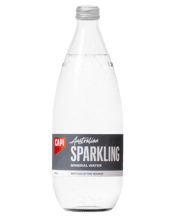
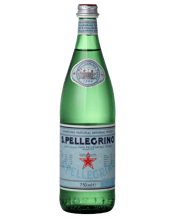
What is it? Sparkling mineral water is nature’s fizzy drink. Springing up in the wild, sparkling mineral water is naturally carbonated and, importantly, contains minerals like magnesium and calcium (in a quantity of 250 parts per million, according to the Australian Bottled Water Institute).
Mineral water is definitely a step up flavour-wise from soda water and, depending on the naturally-occuring minerals contained within, it can be a little salty, sweet, bitter or even metallic. And because mineral water will contain different types and levels of minerals depending on its source, they all taste subtly different.
Some history: Historically, natural mineral springs (like those around Victoria’s Daylesford and Hepburn Springs, but they appear all over the world) have been popular attractions, particularly for the reputed health benefits of drinking and bathing in mineral water. One 1851 report at Hepburn Springs declared the mineral water there was “of great medicinal benefit in Hepatic, gouty rheumatic and similar afflictions”, though health claims like this are tough to swing in the modern era. These days, most of our mineral water is bottled at the source and shipped out, so we don’t have to trek to Hepburn Springs just to have a drink (though it is a very lovely place to visit).
How to use it: Drinking mineral water by itself is the go-to (we all had that one friend whose family seemed to live off nothing else, right?), but some of the bigger guys in the game reckon the mineral content makes it especially food-friendly. You can also use mineral water in place of soda in mixed drinks if you like, but just keep in mind that those dissolved minerals will bring extra flavours to the table.
What is it? Club soda sort of sits between soda water and mineral water. Like soda water, club soda is any old water that has been force-carbonated (meaning the bubbles are added directly) and, like mineral water, it has a certain percentage of dissolved minerals (generally potassium and sodium). Unlike mineral water, though, club soda isn’t naturally occurring, so those minerals are added specifically to give it a little flavour, which some claim offsets the natural acidity added by carbonation. Basically, it's a slightly-minerally soda water that might have a light salty flavour.
Some history: Being that club soda is basically soda water with some minerals added, you already know most of its history by now. One claim suggests that the first commercial club soda came from Irish company Cantrell & Cochrane with the club in question being the Kildare Street Club.
How to use it: We should point out that club soda, for whatever reason, isn’t actually all that common over here (it seems to be very much an American thing). But if you can get your hands on the genuine article (and not just soda water that’s calling itself club soda, as is often the case), you can definitely sub it into your mixed drinks. Think of club soda as a slightly souped-up version of regular soda water that can add a touch of depth to a simple mixer like a Whisky Highball, or round off a sweet and bitter Americano.
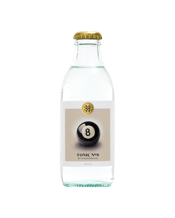
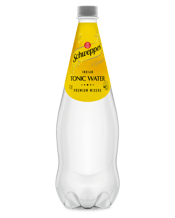
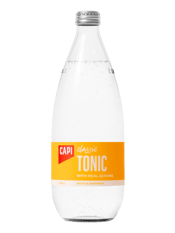
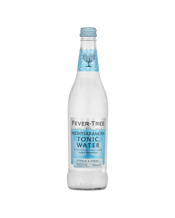
Some history: To you and me, tonic water is half of a Gin and Tonic but, to history, tonic is the drink that stops malaria. That’s because of that ingredient, quinine, an extract from the bark of the cinchona tree. Quinine lends tonic its signature bitter flavour, but for the Indigenous peoples around Loja, Ecuador, quinine (in its cinchona bark form) was a life-saving way to fight malaria, an infectious disease carried by mosquitoes that causes fever, vomiting, headaches and, often, death.
These days, malaria is mainly a tropical disease but it was once widespread throughout Europe, too. By the 1600s, the miraculous properties of the cinchona bark were taken from South America back to the northern hemisphere by European colonists and, by 1858, tonic water in its modern, carbonated form was patented. The full history is long and complicated and fascinating (and well worth a read, if you have the time), but it seems that our current fascination with the Gin and Tonic arose sometime around the turn of the 20th century, spurred on by tonic’s reputation as a refreshment in tropical climates.
How to drink it: You don’t need us to tell you about the G&T, but tonic is definitely not a one-trick pony. Cold-brew coffee and tonic water (in a half and half ratio on ice with a slice of lemon, as a starting point) adds some pep to summer arvos, while white port and tonic (one third of the former, two thirds of the latter, on ice) has long been a popular aperitif in Portugal. Subbing other spirits for gin can be a fun experiment, too. We’re particularly partial to a tequila and tonic.
One last point – not all tonic is made equal. These days the flavourings and sweetness can vary considerably from brand to brand, so it’s worth exploring the range to find the tonic that best suits your gin – or cold brew, or white port, or whatever you fancy mixing.