

A closer look at the bartender’s dance – a careful balance of spectacle and utility – and what it can teach us about shaking better cocktails at home.
In ballet, they’re called positions – twirls and arabesques, disciplined, and in time with the music. For karate, it’s kata – stances, punches and kicks in varying sequences and combinations. In bartending, it’s the flamboyant, loud manoeuvres of the bartender shake. You can often hear it before you see it. The clacking of ice whipped against tin – like masters of flamenco clicking their castanets. But look a little closer, pay a little more attention, and you’ll see the movements are not all the same. Not just a random change in the flick of an arm or placement of a hand, but careful, deliberate differences. Some chalk it up to individual preference or even a trademark, but in actuality, it's part of a series of dances a bartender must learn when serving up the best drink possible.
There are two key parts to the bartender dance. There’s the utility of it – getting enough dilution or air into the drink. Then there’s the spectacle of it – the seamless and romantic part. These two elements need to work together, to be what we call bartending. If you have a fancy shake but aren’t getting the right dilution into the drink, then it’s all show and no substance. If you’re making the drink without considering the customer experience, then you need to remember there’s a reason cocktails are made in front of the patron and not in a kitchen or prep room. Blending these two components is what the master bartender, the legends of the trade, do every night – the bartender dance, if you will.
For the average punter making cocktails at home, there’s a whole lot less to worry about – your mates are hardly going to care if you don’t put on a show. But while you may not need to replicate these shakes at home exactly, knowing, watching and understanding why bartenders use certain shakes for certain cocktails will improve your at-home creations immensely. With that in mind, let’s break down the basics of shaking like an expert bartender.
Ice makes or breaks your drink – specifically which ice you use and what temperature. Most bartenders agree that the perfect ice for shaking needs to be a little wet. Grabbing ice straight out of the freezer, ice that sticks to your skin when you touch it or “dry ice”, will not dilute as fast as ice that comes from an ice machine. For drinks like the Daiquiri, quick dilution is super important. So, if you’re working with freezer ice, let it melt slightly or even add a little water to give it a wet clear surface.
Next is the shape of the ice. Again, most bartenders agree that cubed ice is king. Anything hollow or smaller will not garner the same effect as nice medium-sized cubes. If you’re playing at home, normal ice cube trays that you find in any supermarket will do the trick. There are some bartenders who shake with a huge chunk of ice and a few smaller bits to properly dilute and aerate, but in general, cubes are the way to go.
Hollow ice is not good for shaking cocktails because it shatters and over-dilutes – the same goes for crushed ice, which will dilute your drink way too much and way too quickly. Similarly, never use the same ice twice. So, if you have a drink that calls to be served over ice or needs to be shaken wet twice (rare), don’t use the ice that you’ve already shaken. Pour it out and use new ice, otherwise you’ll be left with an over-diluted mess. Lastly, we’re not looking to smash the crap out of the ice. The goal is quick dilution, cooling the cocktail right down and aeration (bubbles/foam). At the end of shaking, your ice should not be smashed, it should be nice rounded cubes.
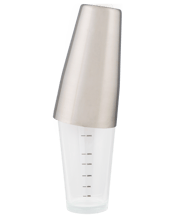
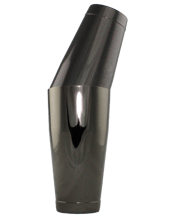
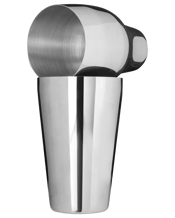
The standard shake is the bread and butter of a bartender's arsenal. It’s used when heavier ingredients need to bond with the spirit element of the drink – think things like juices and syrups. First, add your ingredients to a shaker and then fill your shaker with ice. Make sure your tins are secured (unless you want to be covered in your cocktail), and shake well for a slow count of eight to 10 seconds. Most bartenders have their own preferences here, but eight to 10 is a good general rule of thumb. Be wary not to over-shake, we don’t want to over-dilute the mixture. The rigour of the shake, however, depends on the cocktail being made, so if it’s a Tom Collins it’ll only need a couple of solid flicks, whereas a Daiquiri needs a bit of heft and action. Why? Well, drinks like the Daiquiri and other fruity or citrusy cocktails that are served up (without ice) need a good shake for dilution, as they won’t be getting any further dilution once they’re in the glass. Whereas your Tom Collins and other citrusy or fruity cocktails served over ice, don’t require as much of a shake as the ice in the glass will do most of the work.
The movements of the standard shake are up for interpretation, but most throw the tins horizontally over their shoulder, gripping the front and back of the shaker with each hand. Others choose a smaller range of motion and grip the middle of the shaker, while some, for simplicity (and just in case the tins come loose), do much safer, more approachable movements.
Dry shaking a cocktail simply means shaking your cocktail without ice. Any cocktail that contains egg whites (like the Clover Club or Whiskey Sour) has to be given a dry shake. This is so those proteins in the egg emulsify with your other ingredients, properly aerating the mix for that lovely frothy texture. The dry shake requires a bit more time to properly combine – think about how long it takes to whip meringues – so around 30 seconds of vigorous shaking is ideal. After the dry shake, add ice and standard shake for another eight to 10 seconds before fine-straining into your serving glass.
The way some bartenders see it, adding ice at all when egg whites are involved is sinful and will never yield the best results, so in comes the reverse dry shake. The reverse dry shake is a dry shake, but in reverse (duh). So, standard shake your mixture (with ice) sans egg. After eight to 10 seconds of shaking, fine-strain your mix into either the other half of your shaker or another set of tins and discard the ice. Now you can add your egg whites and dry shake vigorously to ensure emulsification and frothy texture. Fine strain into your chosen glass.
Some bartenders opt for the reverse dry shake on thick, creamy cocktails like the Ramos Gin Fizz to ensure the frothiest foam possible. But really, the preference between the two shakes is very much the bartender’s choice.
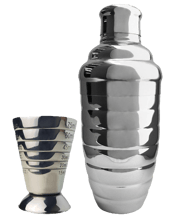
There are a lot of movements involved in the hard shake. It’s a very stylised and unique way of shaking and is super recognisable – you’ve likely watched in awe as a skilled bartender whipped and flicked a shaker around with flair. Designed by Japanese bartender Kazuo Uyeda, the hard shake puts emphasis on moving and whipping the ice around in different angles within the shaker, rather than just back and forth. It’s very difficult to explain, but essentially the bartender grips either side of the shaker (a Cobbler is preferred) holding it horizontally, with their elbows high. It’s then whipped and pulled back horizontally across the body in either a two-step or three-step combo (there are also four-points, eight-points and butterfly styles as well). Supposedly, this action is said to reduce smashed ice, control dilution and increase aeration, but this was somewhat disproved by Dave Arnold (a key figure in the science of bartending) in 2009.
However, the purpose of shaking isn’t just to make a good drink. The hard or Japanese shake gives customers a bit of theatre, and it shows a patron that a solid amount of skill, care and love are going into the cocktail. And that is just as much bartending as the ingredients in the drink – two halves make a whole craft.