


Struggling to make sense of Champagne? Keep this guide handy next time you choose a bottle of French fizz.
Brut? Blanc de blancs? Récoltant-Coopérateur? Sometimes it can feel like you need to speak fluent French just to buy a bottle of Champagne. We get the struggle. Honestly, we’ve been there. But despite the seemingly impenetrable terminology, it’s easy enough to figure out what’s inside a bottle of Champagne by reading what’s written on the outside. You just need a little cheat sheet and sage advice. That’s where we come in.
The first thing to check on the label is the word ‘Champagne’. Do you see it? If you do, it’s the genuine article because the name is protected by law and only real-deal Champagne (grown and made in the French region of Champagne) can be labelled as such. If you don’t see the word in big letters on the label, the rest of this article might not make a lot of sense. We’ll wait here while you go and get a bottle of Champagne and come back. Take your time, we’re happy just chilling.
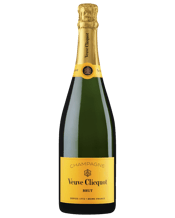
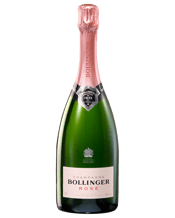
Okay, you’ve got a bottle of Champagne in hand (verified by the word ‘Champagne’ on the label). The next piece of information to consider is the producer’s name, also known as the house or brand. Examples of producers are Bollinger, Veuve Clicquot and Duperrey – all makers of Champagne, but not specific wines.
Knowing a Champagne producer can be helpful if you want to remember the wine again in future, or it could be a good way to find a bottle for a gift. In some cases, if you see a hyphenated producer name, it could suggest that the wine is a ‘grower’ Champagne – but more on that later.
Not every bottle of Champagne will show this detail, but many will. Producer initials are often located in small writing at the very bottom of the wine label and will usually look like two capital letters and a string of numbers. It’s the letters we’re interested in here.
Those two letters distinguish the Champagne as coming from one of seven types of producers and, while it probably won’t have much bearing on your decision, it can be good to know. Those categories are:
NM: NM stands for Négociant-Manipulant, which means the producer buys their grapes from different growers. This is the most common type.
RM: Remember when we mentioned ‘grower Champagne’ before? Grower Champagne is wine made by a producer who grows their own grapes, and that’s what RM or Récoltant-Manipulant signifies.
CM: CM or Coopérative-Manipulant is where a wine-growing cooperative all contributes grapes under one Champagne label.
RC: Récoltant-Coopérateur or RC is a label used when a single grower has wine made by a winemaking cooperative.
- ND: A wine might be labelled as ND or Négociant Distributeur if a négociant (that’s a wine merchant, but not a Dan’s-style Wine Merchant) buys grapes or wine and blends and bottles that wine themselves.
- MA: MA or Marque d’Acheteur wine is custom-produced for a client.
French wine works a little differently to the Australian stuff, particularly when it comes to which grapes can go into which wines. In Champagne, if you want to call the wine ‘Champagne’, producers can only use three grapes: chardonnay, pinot noir and pinot meunier. Quite often, winemakers will use a blend of two or three, but they don’t have to, and if they pick and choose, the wine label will usually tell you so. These styles include:
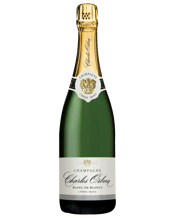
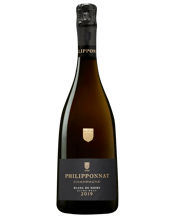
Blanc de blancs: Translating as “white of whites”, a label featuring the phrase blanc de blancs indicates that the Champagne was made using only white grapes. In Champagne, that means chardonnay, and you can expect a crisp, elegant style with good acidity and minerality.
- Blanc de noirs: This translates as “white of blacks” and, with blanc de noirs, you’re getting a white Champagne made only from one or both of the two allowable red grapes – pinot noir and pinot meunier. These styles are often a touch richer and fuller bodied than blanc de blancs styles.
- Rosé: Champagne rosé is usually a shade of pink and can be a little fruitier than its white counterparts. These rosés can be made from sparkling white Champagne topped up with some still red wine, or by leaving the juice in contact with red grape skins for some time.
Pretty much every still wine we buy will have a vintage listed on the label. This is good because it can tell us things like how old the wine is or (if you know anything about the year in a region) what the quality might be like. Champagne can have vintages, too, of course, but it’s not nearly as common.
Non-vintage: If you see labels like ‘non-vintage’ or ‘NV’ on a bottle of Champagne, it means that the wine is a blend of multiple vintages. This is the most common type of Champagne, often done to produce a consistent house style and to avoid the changes common to vintage wines. Sometimes, the word ‘cuvée’ will also mean non-vintage, but not always.
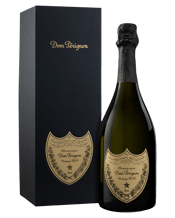
- Vintage: If you see a year (‘2000’, ‘1956’) on the label, it’s a vintage Champagne, meaning the wine in the bottle was made in a single year. These are often made only in exceptional years, as deemed by the individual Champagne houses (recent releases of Dom Perignon, for instance, are from 2010, 2012, 2013 and 2015). The word ‘Millésime’ can also tell you that the wine is a vintage Champagne.
If it didn’t click already, one of the greatest things about Champagne is the sheer amount of choice we get, and one of the biggest choices is the sweetness level. When Champagne is made, producers will usually add a sugary liquor called ‘dosage’ towards the end of the process. This helps balance the wine’s acidity and gives it some extra body and depth.
As ever, preference for sweetness is a personal choice, so keep an eye out for the following words on the label:
Brut nature: The driest of the dry. Wines labelled ‘brut nature’ are also sometimes called ‘zero dosage’ or ‘no dosage’ because they don’t get any sugar added at all. Brut nature wines have less than 3 grams of sugar per litre.
Extra brut: Very dry. Extra brut wines have less than 6g of sugar per litre owing to a small amount of dosage.
Brut: Dry. Brut wines are the most common and offer a nice balance of acidity and very subtle sweetness with less than 12g of sugar per litre.
Extra-sec: Quite dry. Extra-sec Champagne has between 12 and 17g per litre.
Sec: Dry-ish. It’s not getting into real sweet territory, but sec wines are definitely getting there with between 17 and 32g of sugar per litre. You could call it ‘medium dry’, maybe.
- Demi-sec: Sweet. With between 32 and 50g sugar per litre, demi-sec wines are definitely sweet.
- Doux: Very sweet. Wines labelled ‘doux’ have more than 50g of sugar per litre and that can make for a very sweet Champagne indeed.
In French wine, an Appellation d'Origine Contrôlée (AOC) is a protected name for a winemaking region – like Champagne. Within an AOC you might get some different villages, communes or subregions (which we’ll cover in a minute), but you’ll also sometimes find a classification system that ranks the general terroir – that is, the winegrowing area.
Champagne has three of these classifications, but only some areas fit into these categories; the rest are just unclassified. This means you won’t necessarily see a classification on your Champagne label, but some of these include:
Grand cru: Grand cru Champagne is considered to have been produced in the very best growing areas. It doesn’t necessarily mean the wine is any good (that’s up to the winemakers and growers), but it’s a very good place to start.
- Premier cru: The second-ranked of the classifications, premier cru wine is still a very high designation and a sign of a potentially delicious wine.
- Autre cru: Wines designated ‘autre cru’ are the lowest of the classified Champagnes, but don’t think this means the quality is low. As always, it’s a winemaker’s skill that makes the biggest difference.
We’ve covered most of the really important information you’ll find on a Champagne label, but it’s not the end of the line. You might also see:
Village: The Champagne region is made up of a collection of villages or growing areas and, while it won’t always appear on a label, it’ll sometimes get printed. If you really know your stuff, this might help you pick a wine but, for most of us, it’s just some nice extra info.
Size: Most Champagne will be 750ml, but half bottles of 375ml or magnums of 1500ml are somewhat common, too.
- Alcohol content: It’s how much of the wine is alcohol – usually around 12% or so.
- ‘Vieilles Vignes’: Translates as ‘old vines’ and, while not always printed, the phrase lets you know that the wine is made from old vines, which can be an indication of quality in some cases.





%20(1)?$dans-daily-web-image$&hei=900)
?$dans-daily-web-image$&fmt=png-alpha&wid=800)