


It’s called a Boilermaker, and it’s delicious. We chat to Adam from Boilermaker House about how to get this delicious drink right.
There is nothing holier for the clocked-off worker than the end-of-shift Boilermaker. More than a drink, it’s a drinking ritual akin to a sort of communion. If you’ve never worked in hospitality, the term Boilermaker might be new to you, but, put simply, a Boilermaker consists of two things: an ice-cold beer and a shot of whiskey (or whisky – depending on the style), AKA the perfect knock-off combo.
If this doesn’t sound like your thing, bear with us. A well-constructed Boilermaker isn’t the same as a chaser – masking a bad shot with a watery beer. Done well, it’s a truly excellent drink (some even call it a cocktail) that we (and many savvy bartenders) believe earns its place on any good menu. And thanks to an explosion of brilliant beers and artisanal spirits, this stellar drink is making its comeback.
While it may seem super easy to master (how could you screw it up?), there are a few tips and tricks for making a great one, particularly when it comes to choosing your whiskey and beer. For this, we’ve enlisted the help of Adam Stewart, ex-Venue Manager of Melbourne’s Boilermaker House, Australia’s only dedicated Boilermaker bar. “It’s a temple to all things whiskey and beer. It's the namesake, right? We love beer. We love whiskey,” Adam says of the iconic venue he led for the past five years before moving over to The Everleigh. Home to around 800 whiskeys, Boilermaker House and its team are exactly who you want to talk to when it comes to mastering this two-ingredient drink.
It’ll come as no surprise that the Boilermaker has been serving shift workers (and by that we mean steel workers, bartenders, chefs, lumberjacks and beyond) for yonks. “If you go back decades, centuries, the concept of a beer and a shot is not a new one,” Adam explains. Look at Europe and you’ll see the French have been dropping Picon bière in their beers (a different kind of Boilermaker) since its invention. Over in South Korea, the Somaek (soju dropped in beer) gained traction in the 1970s, and even in Australia, punters have been swigging Depth Chargers and Irish Car Bombs since the 1960s. But the Boilermaker we know and love today is believed to stem from the steelworkers of Pennsylvania. “The origins are a bit murky – the fountain of all wisdom that is Wikipedia says it's originally from 1920s Wisconsin. But I call BS on that. There's no way it originated in the 1920s,” Adam says. He believes the Boilermaker’s popularity arose even earlier, during the Industrial Revolution of the late 18th to early 19th century – “those big steel cities in the US where all these guys would knock off and go to a bar, and what do they want? They want a beer and they want a whiskey. The order eventually became known as the Boilermaker special.”
Gary Regan, author of Joy of Mixology, suggests a similar theory. “The Boilermaker is a drink that cuts right through the heat, dirt and dust of the steel mills… The whiskey was cheap and the beer was cold. The glasses were dirty, just like the restrooms, but you stopped every day with the guys you worked with and had a Boilermaker.”
The Boilermaker is not a hard drink to make, but you can have fun toying around with the pairings. According to Adam, there are a few key ways to effectively pair your whiskey and beer, and it follows much the same advice as matching food and wine.
“The first is contrasting pairings to highlight the differences,” Adam says. At Boilermaker House, the contrasting sweet and sour pairing reigns supreme – “a sour beer paired with sweeter whiskey, like one that’s heavily sherried, works brilliantly.” The second method is to look for similar elements in the combination. This works well for very floral or fruity beers and whiskeys. “Or try pairing a stout with a heavily peated whiskey,” Adam suggests. It’s essentially an extension of a flavour – you’re continuing the taste of the whiskey through the beer and vice versa.
Another popular method is what’s known as complementing. Here, you’re identifying an overtly dominant flavour and taming it with something else to make it more balanced, or pairing varying flavours that blend together to create something even better. Say, if you taste cinnamon in a whiskey, you might pair it with a beer that has a bit of an apple flavour to it, as we know those flavours go hand in hand.
Of course, this isn’t an exact science and Adam has been known to dabble in alternative spirits. “Tequila with a Margarita sour beer is excellent. By no means does it have to be whiskey, we just reckon it's probably the best way to go.”
Beer and whiskey can be acquired tastes. If you’d like to dip a toe into the magical world of Boilermakers, Adam suggests starting with lighter styles. At Boilermaker House, the team guide you through those flavours, but you can also do this at home. Lean into the process and explore different combinations – it’s all part of the fun.
There are no real rules when making your Boilermakers, but Adam does ask all that we follow one simple rule: “Don't drop the whiskey in the beer,” Adam stresses.
“If you want to go between sipping the whiskey and sipping the beer? Excellent. If you want to drink the whiskey first and sit on the beer? Also super fine. If you want to start with the beer and finish on the whiskey, that's also cool. Just don’t drop them in each other. That’s the only hard-and-fast rule I’ve really got.” Why? Because you’re muddling the two flavours, and that robs you of enjoying any of the unique flavours or complexities of either, leaving you instead with just a weird-tasting beer.
Now that we’ve got the basic formula down, let’s get into some real-life examples.
1. Boilermakers for beginners
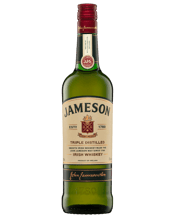
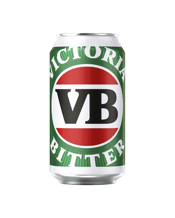
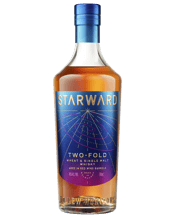
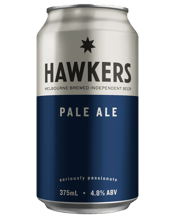
If you’re just starting out with this classic drink, Adam suggests going for something cheap but very cheerful. Try an easy Irish whiskey, like Jameson, paired with VB. “These easier options help you to figure out what you do or don't like before going down that rabbit hole of complex flavour profiles.” Or if you want to keep it no-wukkas Australian, Hawkers Pilsner and the cracking Starward Two-Fold Double Grain Whisky is a good place to start – the floral, spicy notes in the pilsner gently mesh with the smooth spice and tropical fruits of the whisky, making for a very sippable Boilermaker.
2. Sweet whisky with sour beer
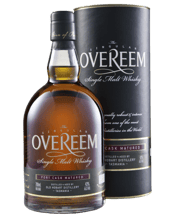
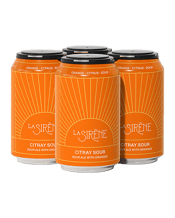
Tamania’s excellent Overeem Port Cask Single Malt Whisky is a perfect match for a sour beer like La Sirene’s Citray Sour. “Because it’s a rich and sweet whiskey, a fruity sour gives that little bit of acidity to cut through the richness.”
3. Japanese whisky with strong ale
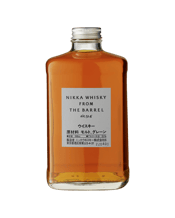
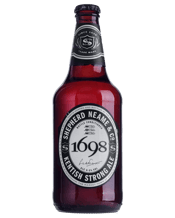
Fan favourite Nikka Whisky From The Barrel needs an equally powerful pairing. “It comes in at 50% ABV, so you need something strong to back it up,” Adam explains. “I’d be looking at a strong ale – anywhere between 7% and 9%.” He suggests an ale that isn’t too hoppy, but still features a little bit of spice from the ABV. “You want something strong enough to match up without overpowering it.” Shepherd Neame 1698 Strong Ale is an English classic that does the job wonderfully – rich, fruity and full of flavour.
4. Rich Highland Scotch and pilsner
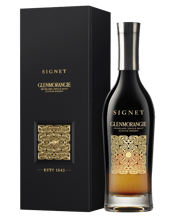
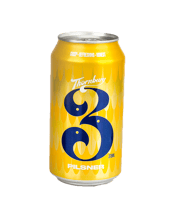
If you’re lucky enough to have a bottle of Glenmorangie Signet in your possession – “Ooooh! Delicious!” – you can indeed use it in a boilermaker, but be sure you let the Scotch be the star of the show. “I’d go for something like a traditional Czech pilsner – or here in Australia we’re doing a heap of new-world-styled pilsners – basically, anything with 'pils' in the title,” Adam says. The Thornbury Pilsner from 3 Ravens has a little hop backbone, but not so much it’ll blow the whiskey away.
5. Fruity Speyside Scotch with award-winning NEPA
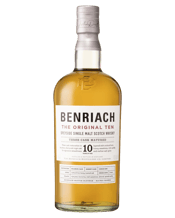
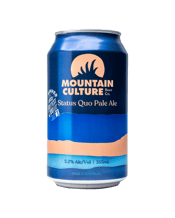
What about Mountain Culture’s Status Quo Pale Ale? This New England-style pale ale picked up the top spot in this year’s GABS awards, so we had to ask how Adam would pair it. “Benriach 10 Year Old Single Malt Scotch, to be honest,” he says. “It just has a little something-something with the malt and a tiny bit of richness to it that will punch through well.” He explains that because the pale ale is on the more sessionable side, you don’t want a spirit that will drown it out. So, a whisky like Benriach 10, that is a bit lighter, but still interesting enough to keep up, will work best.
6. Rye whiskey and IPA
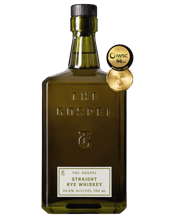
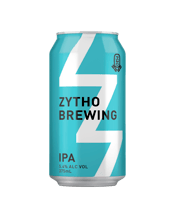
And lastly, the most popular and delicious of all Boilermakers? This combo happens to be Adam’s favourite. “We always have a bottle of The Gospel Straight Australian Rye Whisky in the bar. They make some cracking juice, and the distillery is just around the corner from us,” Adam says. A big ballsy rye like this goes great with an IPA. Try The Gospel alongside the hoppy and flavourful Zytho Brewing IPA. “Or if you want a non-traditional pairing, go for a cider,” Adam suggests.




%20(1)?$dans-daily-web-image$&hei=900)
?$dans-daily-web-image$&fmt=png-alpha&wid=800)