NOW EXPERIENCING:The cheat’s guide to converting cocktail measurements
Learn|DIY How to|Spirits 101|Spirits

The cheat’s guide to converting cocktail measurements


Read time 4 Mins

Posted 06 Jun 2024

By
Lulu Morris


A collection of cocktail jiggers and measures on a shelf

How to get the quantities – and balance – right every time.

Ah, the age-old Google: converting oz to mL, cups to mL, and exactly how much is in that tsp? These are questions we’ve all frantically Googled with eggy fingers after realising that great recipe for a Whiskey Sour was actually in American measurements… yikes! So, to prevent situations like this from happening again, we’ve compiled a conversion cheat sheet so your cocktails don’t end up tasting, well, bad.
Converting ounces to mLs and cups and vice versaNot a perfect conversion (we round up from 29.5735296), but a fluid ounce is basically 30mL. Now, say you’re making a big punch or even mixing a batch of Martinis and the recipe calls for cups – CUPS! But don’t fret, friend. A cup is equal to around eight fl oz and 250mL. It’s when it gets into weight that things get a bit dicey, but that's a whole other kettle of fish. That’s your fairly simple ‘American versus the rest of the world’ guide done and dusted, but how about those fiddly measurements? You know, things like barspoons, tablespoons and shots? We’re way ahead of you.
What’s a shot?A shot can be pretty fast and loose, and differs between the UK, America and here in Australia. Why? We actually have no idea. But, generally, a shot is anywhere between 25mL (UK) to 30mL or 1 fl oz. It’s important to keep in mind that if you choose 25mL as the quantity of your shot, then the rest of your ingredients need to follow accordingly so you get that balance right. It all sounds a bit maths to us, so luckily all our fab cocktail measurements are in mL, and you can browse our recipes here.
What’s a teaspoon, tablespoon and barspoon?

Trickier stuff now, people. When a cocktail recipe calls for a “spoon” it’s almost always referring to a barspoon, which is 5mL or ⅙ fl oz (0.17 US fl oz) or thereabouts. Teaspoons are trickier as the bowl measurement of a metal teaspoon that you find in your cutlery drawer can differ quite a bit – 2.5 to 7.3 mL (0.088 to 0.257 imp fl oz; 0.085 to 0.247 US fl oz) to be precise. So, for ease and consistency, buy a barspoon or invest in a chef’s measuring teaspoon, which will sit at 5mL or 0.17 US fl oz.

If a recipe calls for tablespoons (rare in cocktails), again, DON’T PANIC. The normal bowl depth of a tablespoon in America sits at 15mL or 0.5 fl oz. In Australia, however, our tablespoons are quite large – on average around 20mL, which is about 0.6 fl oz – so it’s important to suss out whether a recipe is American or Australian, and then you can adjust the measurements of the other ingredients. We don’t want an unbalanced cocktail.

What’s a dash and a drop?

They’re the same, right? Wrong. A drop from a pipette is miniscule and you’d have to drop around 41 times to get an equal measurement of 1mL (according to famed cocktail guy Simon Difford, that is). Whereas a dash (if we make the average amount of dashes four) is around 1.25mL. This is super-precise stuff here, and we can’t imagine you’d need such small measurements unless you were entering some sort of fancy bartender competition. 

We could get into the size of ice scoops and other smaller and way-too-variable measurements, but there isn’t really a reason to measure out your ice that carefully unless you're batching, and that’s water, not ice. 
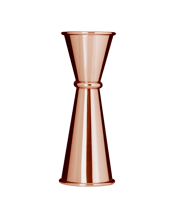
Missing a few key items in your bar at home? Check out our guide to the seven essential cocktail tools you need.
image credits: Kayla May (photography), Bridget Wald (styling).