


Australian prosecco has come so far in a very short time – with a little controversy along the way.
The French gave us Champagne, and we’re forever grateful, but sometimes the moment calls for fresh, easy-drinking bubbles that come with a friendlier price tag. Enter prosecco – yet another delicious creation we can thank the Italians for bringing into the world. While they’ve been making it since ancient Roman times, our own producers have taken it from a not-yet-planted idea to world-class wine in just over 20 years. Yep, Aussie prosecco is giving the Italians a run for their money – in more ways than one.
Prosecco has fast found a horde of fans on our shores. Originally from north-east Italy, this fizz is famously crisp and lively, with bright fruit flavours – think green apple, melon and pear. That much-loved freshness also comes down to the tank method used to produce the vast majority, and despite being a renowned aperitif (or should we say aperitivo?), it also makes a mean match for so many different dishes. There’s a lot to love about this crowd-pleasing wine.

Prosecco’s short history here can be traced to the King Valley in Victoria’s North East. This pretty wine region’s farming potential drew many Italian immigrants post-World War II who soon established tobacco plantings. However, as that industry faltered, many producers switched to growing wine grapes, particularly the ones they’d known and loved back home.
Otto Dal Zotto, who comes from the same Veneto region of Italy as prosecco, had been growing and making wine on his King Valley property since 1987. But he had a prosecco-shaped hole in his heart. At this stage, it didn’t exist in Australia at all, and there was little market for it, but thanks to the pioneering Chalmers family who imported the vines, the Dal Zotto family was able to plant the first prosecco grapes (now known as ‘glera’) in 1999. Their inaugural 2004 release was an instant hit, and it wasn’t long before other King Valley producers – and demand – followed.
Today, prosecco is found in 11 Aussie regions, according to Wine Australia, and it’s been the fastest-growing variety over the past eight years. While prosecco thrives in cool climates, popular styles are also now rolling out of warmer regions, such as the NSW Hunter Valley and Murray Darling in Victoria, and it continues to find new homes and expressions.
The King Valley really is prosecco’s spiritual Australian home, though. The Italian roots here run strong and there’s even a ‘Prosecco Road’ – a route you can travel that takes you along the wineries throughout the region that have since joined Dal Zotto in championing the wine style.
What’s in a name? Everything, if you ask the Italians. They’re not happy about us labelling our proseccos, well, prosecco, and they’ve made several attempts to make us call it glera instead.
See, Italy changed the grape’s name from prosecco to glera in 2009, and Prosecco was declared an official geographical indication, or GI, in its native region. Over there, they have their own set of rules, as well as regional and quality classifications. If you spot DOC on a label, it represents the base level of prosecco, made in parts of Italy’s Veneto and Friuli-Venezia Giulia regions, while DOCG is deemed higher quality, covering the province of Treviso (the two most famous denominations being Conegliano Valdobbiadene and Asolo).
In making these changes, Italy wanted the name Prosecco to be used solely for sparkling wine made in Italy’s north east, much like Tuscany’s Chianti or Champagne’s Champagne. However, because Australia planted prosecco before the GI became official, and we already knew and sold it as prosecco, we were allowed to keep using the name. The debate is still raging, and Italy is likely to try and stop us again but, for now, prosecco can stay on our labels.


Just as the world’s a far better place for all the pizza, pasta and gelato made beyond Italy’s borders, we think more prosecco can only be a great thing. And like almost everything in wine, there are so many different expressions both here and in Italy, thanks to varying soils, climates and techniques – prosecco will therefore never be just one thing. There's plenty of space and desire for both Italian and Australian prosecco (certainly in my house) so, the best way to truly understand it is by tasting different examples.
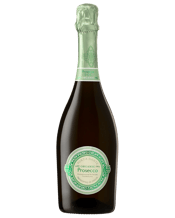
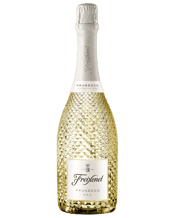
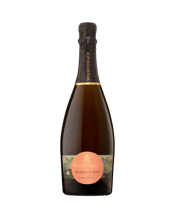
For a textbook Italian style, look to the Porta Dante Organic Prosecco – expect a delicate, fine and lively wine, with stone fruit, apple, citrus and honeysuckle flavours. If you’re into pink bubbles, try the Mionetto Prosecco Rosé; blending glera with pinot noir, it’s dry, with bready aromas and red fruit and grapefruit flavours. And just to prove it’s not just us Aussies in on the act, Freixenet Prosecco is sourced from Italy, but made by one of Spain’s top Cava producers. It’s fresh, fruity and floral, with apple and citrus flavours.






%20(1)?$dans-daily-web-image$&hei=900)
?$dans-daily-web-image$&fmt=png-alpha&wid=800)