


It's the battle of the bubbles and there can only be one winner. Hint: it’s you.
It's the ultimate sparkling showdown: Champagne is the old champion, a master of all things bubbles for over 300 years, while prosecco is the young challenger that's thrown its cork into the ring. And by young, we mean a relatively youthful 250 years – so who will come out on top?
Neither, to be honest. You're the only winner here because both Champagne and prosecco really are excellent. There's plenty to love, and not much to hate, and though they may look similar in the glass – a glorious, bubbly liquid – there are quite a few differences between the two.
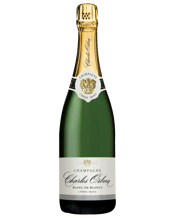
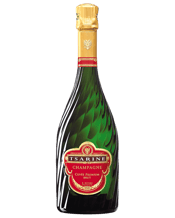
Believe it or not, Champagne comes from Champagne. It's a wine region in northeastern France, about 150 kilometres outside of Paris, and is the only place in the world where sparkling wine can be classified as Champagne. The vineyards here are separated into different villages, the name of which will appear on the label, with the highest-quality areas being denoted first as 'Premier Cru' then 'Grand Cru'.
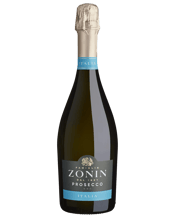
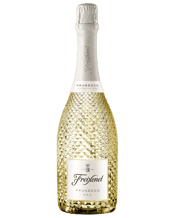
Prosecco is an Italian take on sparkling wine and comes from the Veneto wine region, which is just north of Venice. The Prosecco Road, or La Strada del Prosecco, runs through a lush valley between the towns of Valdobbiadene and Conegliano, and is responsible for producing some of the tastiest bubbles in the world. Like Champagne, the vineyards have certain designations reflecting the quality of the grapes, with the highest status being Prosecco Superiore (DOCG).
The vast majority of Champagne comes from blending the pinot noir, meunier and chardonnay grapes, though there are exceptions. The 'blanc des blancs', for example, is made entirely from white grapes, while the 'blanc des noirs' is produced by using only red grapes. The wine itself is made using the Méthode Traditionelle, a process that actually originated in the Champagne region, which is notable for using a secondary fermentation within the bottle itself to create the wine's carbonation.
Prosecco, on the other hand, comes from the glera grape, which has been grown in northern Italy for hundreds of years. Like Champagne, prosecco goes through a second fermentation to carbonate the wine, but this happens in a tank, rather than individual bottles.
It's because of this difference in production that the price point between Champagne and prosecco is so varied. A good bottle of Champagne tends to be more expensive than prosecco as the Méthode Traditionelle is much more labour intensive, with bottles having to be consistently rotated by hand throughout the process, whereas the tank method is essentially a hands-off process until bottling takes place.
There are a couple of factors affecting the flavours of Champagne and prosecco. Prosecco showcases the characteristics typical of the glera grape, including citrus, honey, apple and pear flavours. It tends to be quite dry too, with plenty of zest and acidity. Champagne displays those apple and pear flavours too, while also bringing nutty notes and a textbook creaminess. In many examples you can expect to taste toast and brioche, flavours imparted as a result of the closer contact with yeast during the Méthode Traditionelle.
When it comes to sweetness, both Champagne and prosecco are labelled according to their level of sugar. Prosecco has three levels, with 'brut' being the driest and 'dry' being the sweetest, and if you think that's confusing, wait until you try to decode the Champagne scale.
There are six levels of Champagne sweetness. At the dry end of the spectrum is 'brut nature', which has 0–3 grams of residual sugar per litre, and at the sweet end is 'doux', which has 50 grams and over. In between those two, in order of dry to sweet, are 'extra brut', 'brut', 'extra sec', 'sec' and 'demi-sec'.
Ultimately, we're fans of both, though there truly is something magical about a ridiculously good bottle of Champagne. If there's a particularly special occasion coming up, then we say go all out.
But otherwise, you'll find that there are some stunning examples of prosecco towards the more budget-friendly end of the scale, it just depends on what kind of vibe you're after. Fruity and fun? Prosecco. Super fancy? Champagne. Somewhere in the middle? A bottle of each, maybe. There, problem solved.






%20(1)?$dans-daily-web-image$&hei=900)
?$dans-daily-web-image$&fmt=png-alpha&wid=800)