


From tequila trains to falcons, here’s what a trip to tequila country taught me.
I inherited a sincere love of agave from my Mexican ancestors – which almost makes up for the moustache. Years spent pouring, drinking and appreciating tequila (and running a publication dedicated to alcohol) mean I’ve spent a hell of a lot of time obsessing over this culturally important, oft-misunderstood and damn delicious spirit.
With a quick Google – or scroll through Dan’s Daily – you can learn plenty about how tequila is made, how to drink it, and (importantly) how not to. But here’s one thing I know: there’s nothing quite like going to the source. During a visit to Tequila – the birthplace of its namesake spirit in Mexico’s state of Jalisco – I picked up many new details, stories and facts that stayed with me.
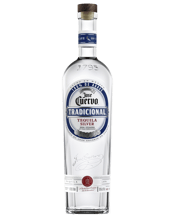
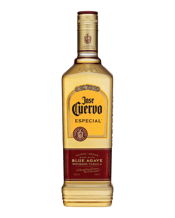
Below are six of the most interesting things I learned while exploring the agave fields and distillery with José Cuervo.

You can, quite literally, hop aboard the tequila express. To be specific: The José Cuervo Express, which runs from Guadalajara to Tequila as part of a full-day experience.
Calling it a “train ride” is underselling it. Depending on your ticket, you’ll enjoy everything from seated tastings to full lounge-like bars, but even at the most accessible level, it’s generous to the point of indulgent. There’s tequila (obviously – solo and in cocktails), food, music, education and a palpable sense that everyone has collectively agreed to lean hard into this day.
As the city fades, the landscape morphs – urban sprawl giving way to rolling fields of blue agave, spiked and orderly, stretching out towards the horizon. It’s the kind of transition that properly recalibrates you for what’s ahead. Included in your ticket is a tour of the field, tastings and full immersion into the town.
Fun fact: the Cuervo portfolio also includes Hotel Solar de las Ánimas – a luxury property in the heart of town. Think rooftop pool, day spa and a sky bar overlooking the volcano, all just steps from the 17th-century Parroquia Santiago Apóstol church. Plus, one of the best buffet breakfasts I’ve ever had the pleasure of overcommitting to.
Jimadores are the backbone of the entire industry, harvesting plants by hand in a process that’s remained largely unchanged for centuries. This isn’t news to anyone, but harvesting agave is TOUGH work. Of course it is – out in the fields, under Mexico’s blaring sun, they execute the hardcore physical labour of stripping away the tough outer leaves to extract the piña (the heart of the agave plant). These babies can weigh up to 60kg and take up to 12 years to mature. Each plant is only harvested once, so it has to be done right. So far, no machine can replicate the precision of a weapon like Antonio.
Here’s what blew my mind: the average jimador harvests around 400 plants in a five-hour shift. Antonio, a third-generation jimador, clocks closer to 750. That’s roughly four plants a minute (for my maths nerds out there), each carved out with intense speed and accuracy using a coa (a specialised blade). It takes him under 30 seconds to dismantle a plant – a skill built over 30 years, passed down through generations.
I gave it a shot, and let’s just say that Antonio can rest easy knowing I won’t be coming for his job any time soon.


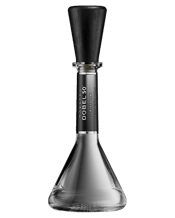
Stepping into La Rojeña – the distillery established by José Cuervo in 1812 (though the family’s agave production dates back far further) – feels less like entering a production facility and more like walking into a living archive. It’s home to all the Cuervo lines, including Maestro Dobel – one of my favourite tequila labels of all.
Antonio and his peers deliver around 180 tonnes of agave daily, translating into 250,000 litres of tequila – numbers that feel abstract until you’re standing in front of literal mountains of piñas, stacked high and waiting to be transformed. A man with a real-life falcon on his arm circles the piña piles, keeping pests at bay. I learn, however, that even the falcons don’t work on Sundays.
What’s striking is the coexistence of methods. Slow, patient agriculture and traditional stone ovens sit alongside more modern processes designed to meet global demand. There’s no sense of one replacing the other – more a layered evolution of both. On the one hand, there are falcons. On the other, experimentation – like ageing tequila in shochu and Armagnac barrels. For now, these explorations sit firmly in the “let’s see what happens” category, but they hint at where the Cuervo line-up could go next.
People in the booze business are obsessed with ‘ageing’. But not all ageing operates the same, and tequila plays by very different rules to spirits like Scotch.
You’ve got the Jalisco heat to thank. Because of how bloody hot it is in this part of the world, the interaction between spirit and barrel is accelerated, meaning tequila develops depth, richness and complexity much faster. It’s a good reminder that older doesn’t automatically mean better – just different. A 10-year-old Scotch isn’t inherently more complex than a three-year-old tequila; they’re simply playing different games.
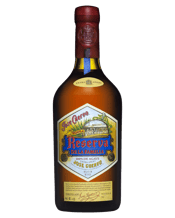
Speaking of age, I did have a peek inside the family cellar – home to hundreds of special batches held carefully aside for the exceedingly fortunate Cuervo dynasty. The Cuervos were the first ever to release an extra añejo tequila (meaning: aged for over three years). Originally these were made only for the family (hence the name, Reserva de la Familia), but they began selling it to the public in 1995, commissioning a different Mexican artist each year to design a collectible box. In fact, you can buy yourself a bottle right now at Dan’s – and you should, it’s phenomenal.


One of the most unexpectedly eye-opening parts of the trip was a blending session – truthfully, something I’d never considered doing with tequila.
After several days of tasting and learning, we were sat down with three Maestro Dobel styles to play with: blanco, reposado and añejo. The brief? Come up with your perfect blend to be bottled, wax-sealed and taken home to Australia. No rules, no “correct” answer – just start pouring, mad scientist-style, and see what happens.
These blends are sensitive – a little more of this, a little less of that, and the whole thing shifts. A splash of añejo brings depth and warmth; too much and it starts to feel heavy. Blanco brings it back to life – fresh, bright and peppery. It also confirms something that sounds so obvious it’s perhaps silly to say out loud, but hits differently when you see it play out: everyone’s palate is wildly different. For those who rigidly subscribe to “older is better”, blending will challenge that.
I landed on 15% blanco, 45% reposado and 40% añejo. My dad, meanwhile, went a clean 50/50 split of blanco and añejo. Both worked – just in totally different ways. That’s the thing: there isn’t one ‘right’ version. Blending turns a drink into something much more flexible, more personal. It stops feeling like something you pluck off the shelf, and starts feeling like something you can shape to your own taste. Fun, right? And it’s something you can absolutely do at home. Grab one of each, start experimenting, and figure out what actually suits you.
It sounds obvious, but José Cuervo was, in fact, a real person. More specifically, Don José Antonio de Cuervo – a key figure in shaping the trajectory of tequila, and Mexico as a result.
Of course, Indigenous people across the Americas have been making and drinking fermented alcoholic beverages for thousands of years – the most famous of these in Mexico being pulque, made from agave sap. You still find it all over the country. But the arrival of distillation with Spanish colonisation transformed the liquid, eventually evolving into ‘vino mezcal’ (AKA mezcal wine), and later, tequila.
In 1758, José was granted land by the Spanish crown to cultivate agave in the region. By 1795, the Cuervo family secured the first official licence to produce tequila commercially (although unofficially they’d been at it for decades). This moment marked the shift from small, informal, regional production into something structured, scalable and (crucially) legal.
It’s hard to overstate the Cuervo family’s impact on how tequila is made, sold and distributed. They were even early innovators in packaging – the first to bottle tequila individually (versus transporting in barrels), making it easier to trade and transport. As production grew, they developed the town of Tequila alongside it – from infrastructure and trade routes through to landmarks that still anchor the town today, including the central bandstand built by the Cuervos in the early 1900s and the distinctive cobblestone streets made from local volcanic stone. It’s now a UNESCO World Heritage Site, and José Cuervo is the world’s biggest tequila brand.
Like all good Mexican telenovelas, the family has had its share of dramas – generational handovers, shifting ownership structures, and the occasional plot twist that could rival prime-time TV. But the through-line has remained intact – José Cuervo is family-owned to this day, now under the leadership of 13th-generation operator Juan Domingo Beckmann.





%20(1)?$dans-daily-web-image$&hei=900)
?$dans-daily-web-image$&fmt=png-alpha&wid=800)