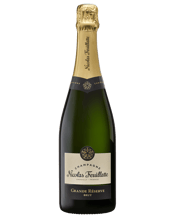
We put two Champagnes to the test in a blind tasting with expert Sean Menezes to see how the cheaper bubbles stands up.
From James Bond to Wimbledon, Champagne has always exuded an unrivalled glamour, with a parade of A-listers gulping down goblets of this liquid luxury. But Champagne is complicated, so whether you're raising a glass to a grand occasion or craving a touch of everyday indulgence, the allure often comes with a hefty price tag. Before you let your love for Champagne fall flat, could budget-friendly beauties still boast the brilliance we yearn for?
Because while we refuse to settle when it comes to indulging in life's little luxuries, the thrill of finding a brilliant drop at a more accessible price may surpass all expectations. We already have a favourite budget-friendly Champagne that comes in under $55, but we wanted validation from the expert. So, we put it in front of him alongside a more expensive mystery counterpart (we can reveal it’s a well-known toasting favourite with a price tag of approximately $70).
Gather your friends, polish your flutes, and join us as we uncork our favourite Champagne dupe in front of our wine expert to get his thoughts on each sip.
What went through your mind when you tasted Mystery Champagne #1? (For those playing at home, this was the dupe – Nicolas Feuillatte Selection Brut Champagne). Any surprises, nuances or characteristics that stood out?
“Very vibrant and refreshing – a style that instantly makes me smile. There are citrus, pear, apple and some lovely jasmine flavours. The bubbles are precise and leave you with a nice tingling sensation.”
And what about the unique flavours and textures of Mystery Champagne #2, the $70 bottle? Did it differ significantly from the first one?
“The second Champagne had a very noticeable buttery character, which told me two things: first, this Champagne has spent time on its lees – basically, sitting with the yeasty sediments that form after the secondary fermentation process – which, secondly, was an indication of something more premium, that in most cases would mean a higher price, too. This Champagne had stone fruit and citrus, but more toast, butter and vanilla flavours than the first.”
Time to spill the beans, or should we say bubbles: why did you bet your taste buds on #1 as being the more budget-friendly option?
“It was a fresher style and, dare I say, made to drink straight away. Great for canapes and something battered or deep fried. I was fairly confident on this one. I drink a lot of Champagne – if and when my bank balance allows me to – but I wasn't surprised to see the one I picked to be the dupe.”
Okay, so you're an expert and you correctly guessed the Nicolas Feuillatte as the more wallet-friendly contender, but does it hold its ground as a worthy dupe?
“The two given to me were two distinctive styles, and I truly enjoyed both, to be honest. The Nicolas Feuillatte is a great value drop that encapsulates a style that made it the number-one-selling Champagne in Paris. It is extremely easy drinking and hits you with those feel-good flavours of citrus, pear, vanilla and a touch of jasmine. It is such a great-value Champagne, too, when you consider its price point against the other more well-known brands on the shelf – you can definitely pick this one with full confidence the next time you come across it. I’ve got no doubt you will be blown away by the quality.”
When it comes to tasting Champagne, what characteristics guide your palate in distinguishing cheaper and pricier options? Do you use any strategies or secret techniquesto uncover the nuances of flavour, texture and aroma in each sparkling sip?
“I look for texture and character in my Champagne. I notice how the bubbles feel and whether the mousse [the head of Champagne] is creamy and delicate, or aggressive. I look for a great balance between acidity and fruit sweetness; generally, great Champagne has this characteristic. It is also a matter of style. Is it vintage or non-vintage Champagne? Is it dominated by chardonnay or pinot noir? The best you can do is keep tasting as much Champagne as you can.
“There are the big Champagne names that we all know, but there are also some grower Champagnes wherein the person who grows the grapes is the one who makes the Champagne. I believe these expressions have a true sense of place. These Champagnes generally tend to be a bit more expensive, but I urge everyone to explore some of them. It will broaden your understanding of the region, and I'm sure you'll be fascinated by the range available.”