Move over Mexico – agave spirits have a new home, and they’re on the rise.
In his book Mexico, the late James A. Michener understood that maguey, the star-shaped agave dotted across the Mexican landscape, was much more than just a plant: “They are like dancers with beautiful hands. They lend grace and dignity to the lands and have always been the symbol of peace and construction. From their bruised leaves were made the paper upon which records were kept. Its dried leaves formed the thatch for homes, its fibres the threads that made clothing possible. Its thorns were the pins and needles while its white roots provided the vegetables for sustenance.”
Beautiful, no? Not hard to see why he referred to agave as the spirit of Mexico. Naturally, Mexico keeps tequila and mezcal production very close to its chest, with various appellation laws and rules in place to protect tradition and taste – international distillers can’t use agave to make tequila or mezcal and label it by those names. However, using agave to create an “agave spirit” is a different kettle of fish. And that’s exactly what’s been happening here in Australia in recent years.
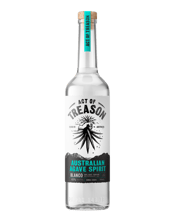
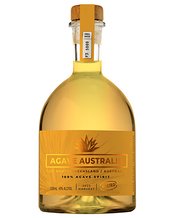
To find out more, we chatted to three Aussie agave spirit producers – Matt Slade from Act of Treason, Mark Watkins from Agave Australis, and Peter De Vries of Echuca Distillery – about their distilleries, methods and why Queensland is proving the perfect place for cultivating these plants on home soil.
We know that agave grows exceptionally well in Mexico, so when looking to create an agave farm in a different country, the climate, temperature and rainfall have to be alike. Obviously, cooler Australian cities don’t cut the mustard, but up the top of the Sunshine State, it’s a different story.
“North Queensland is perfect for agave cultivation,” explains Mark Watkins, Head Distiller from Agave Australis. “We have high rainfall, no frost, rich volcanic soil and plenty of sunshine, all of which makes perfect growing conditions for the plants.” For producers like Agave Australis and Act of Treason, who grow their own agave, this is very important. “Act of Treason is grown exclusively in the Queensland dry tropics alongside the Coral Sea,” Matt explains. “This region has a unique microclimate – where Jalisco [a key agave region of Mexico] has altitude, we have the ocean maritime effect. Local flora and fauna is also a key differentiator with our farm as it is flanked by the gum and mango trees.”

“Australia’s consumption of agave spirits is among the highest per capita in the world,” explains Matt. “The category is growing rapidly… but is dominated by tequila and mezcal. We identified an opportunity to expand the category and create a new region right here in Australia.” For Act of Treason, it wasn’t about producing a carbon copy of tequila or mezcal in Australia, but working with the plants and the local environment to create something new and uniquely Aussie. “Everything about our production is designed to capture and maintain the individual flavour of our agave, and reflect our region.” Using 100% Australian-grown Blue Weber Agave Tequilana, Act of Treason is a farm-to-bottle production.
Despite “quite literally writing the rule book as they go”, the team at Act of Treason do take inspiration from tequila’s traditional methods (they’re the masters, after all). “Traditional tequila uses a tahona [a heavy stone wheel used to crush the roasted agave]” Matt explains. “We have created our own upside-down tahona, where we crush cooked piña [the heart of the agave plant used to make these spirits], releasing the juice.” As well as their unique approach to the tahona wheel, they also follow the same slow three-day cooking of the fruit. This happens in upcycled ovens made from disused shipping containers, matching the same conditions of the horno (AKA oven) used by the most popular tequila houses, as well as using open fermenters.
Where they deviate from tradition (aside from the obvious) is almost everything else – including the vessel they choose to distil their spirit. Mexico and the big tequila houses use stainless steel pots for their first distillation and a copper pot still for the second distillation. Act of Treason, however, uses copper for both first and second distillation, which they feel creates a softer and smoother spirit. But perhaps their greatest triumph is how they’re working towards sustainability. For example, they use biodiesel in their equipment and are planning to implement carbon sequestration, cover cropping, sediment run-off prevention, better water management, energy generation and ag-tech. They also utilise drone tech, geotag plants, and energy-saving sub-coolers, and adopt gravity-fed water preservation, among other innovations.
But the proof’s in the pudding, so what does it taste like and how does it differ from traditional tequila or mezcal? “It still has that familiar cooked-agave backbone,” says Matt. “But it’s layered with notes of lime, fresh-cut grass, minerality and tropical fruits.” This is somewhat different from the known peppery kick of the Mexican agave spirits. “It’s taken many years and a lot of investment and time to get here, but Act of Treason is about to emerge as a premium locally-crafted alternative to tequila and mezcal.”
It’s a similar story at Agave Australis, another farm-grown agave distillery looking to make a name for local agave spirits. “We have taken a fresh approach to the production of our agave spirit,” says Head Distiller Mark Watkins. “The only thing I think we have in common is that we use the Agave Tequilana plants.” For Agave Australis, it was Walkimin in far North Queensland – “one of the perceived best climates in the world” – where they broke ground. “Agave typically doesn’t like frost as it makes the plant drop its brix [sugar content],” explains Mark. “They also don’t like too much humidity or the crowns will rot, that is why this is the best place to grow them.”
But it’s not just about the climate or the “near perfect” temperatures to grow a mature and robust agave crop; it also has to do with soil, yeast and terroir. “The well-drained rich volcanic soils and high rainfall allow for fast maturation of the plants,” says Mark. “The natural yeasts found in our air impart a subtle fruitiness to the fermented plant.”
So what’s next for Agave Australis? “Given agave is a slow burn, taking a minimum of four years to get to a decent mature size, I think we will try different types of roasting, smoke influence and various cask finishes.”


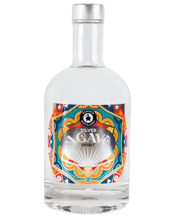
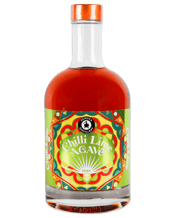
Now for something (almost) completely different. Unlike our farm-to-bottle distilleries, Echuca ships in Blue Agave nectar from Mexico. “We don’t have a source of local agave plants readily available, as they take about eight years to mature, nor are we farmers – we focus on what we’re best at,” says Head Distiller Peter De Vries. “And that’s fermentation and distillation.” And so they are; in 2023, the team sent some of their newly distilled agave spirits to the San Francisco World Spirits Competition, taking home medals for most of their bottles, including golds for their Chilli Lime Agave and Smoked Agave spirits.
Working outside Mexico’s appellation and regulation laws means the team can get as creative as they want. “For our Silver Agave spirit, we decided to emphasise the sweet and fruity flavours in the agave,” says Peter. “This works wonderfully in cocktails like the Margarita.” This led them to develop flavoured drops like their Coffee and Passionfruit agave liqueurs. “If you compare the wide range of styles produced in Australian whisky to its origins in Scotland and Ireland, we can be very creative,” says Peter. “We aren’t following processes steeped in tradition, we are just looking to make a great drink.”