


What’s the difference? And does it matter? Read on.
Diving into the world of whisk(e)y can feel a little like arriving late to a party and not knowing anyone – you can theoretically jump in anywhere and start having fun, but it’s intimidating without an introduction. Well, lucky for you, we like to get in early, so consider this your intro to two of our favourite party guests (AKA whisky categories): single malts and blends.
Whisky (or whiskey with an ‘e’, if it’s American or Irish), is a very broad category of spirits – what passes for a dram in Australia, for example, might not even legally make the grade as a whisky in Scotland. The point is that terms like ‘single malt’ or ‘blended whisky’ don’t always mean the same thing to everyone, but there are some general definitions that will absolutely help you navigate the deep, winding world of whisky.
We’re not here to tell you that one is better than the other or that a single malt Scotch is better than a single malt from Ireland, either. Instead, we just want to make sure you know everyone’s name before you find your place at the party.
For a whisky to make the grade as a single malt, it generally needs to tick two boxes: it must be from a single distillery, and it must be made only from malted barley (at least for whiskies under UK law). Let’s unpack both of those ideas a little.
The first is the ‘single’ part. It might sound obvious that a single malt has to come from only one distillery but, when we get to talking about blended whisky below, you’ll see why that is an important point. See, the whisky in your glass can take a twisty, turny journey to get there and how it does that makes a difference to what it’s called.
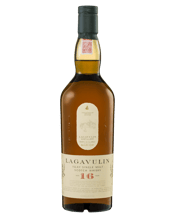
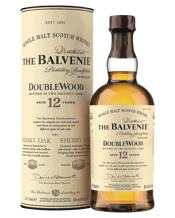
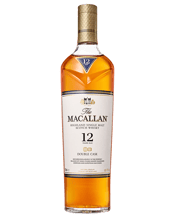
Whisky is made by fermenting grains (like barley, wheat or corn) and then running that fermented grain (called ‘mash’) through a still. The clear spirit that comes out is then transferred into oak barrels to age before eventually making it into the bottle. Distilleries (like Lagavulin, Balvenie or Macallan, for example) might have thousands of these barrels from different batches, each with varying ages and flavour profiles and they can blend them all as they wish in order to get a particular style. If all the liquid in that final, bottled whisky is from the one distillery, it might qualify as a single malt – as long as it ticks the second box, too.
The second part – ‘malt’ – refers to the grain used, which is traditionally malted barley. In the UK, by law, single malt Scotch can only be made from malted barley (distilled in a pot still, specifically) but in places like Australia, single malt isn’t legally defined so we can sort of make our own rules and use other malted grains if we like.
Single malt is a style that, for various reasons, seems to have a little extra prestige. There’s nothing inherently magical or ‘better’ about single malt, but it can be a great way to get a sense of a distillery’s particular style and taste what makes a regional whisky unique, or it can just be a chance for distillers to get creative.
A blended whisky (again, according to UK law) is a blend of at least two whiskies from different distilleries, generally with the addition of a grain whisky as well.
Like single malt, the traditional definition of a blended whisky is strongly tied to Scotch and its legal restrictions, but the rest of the world is free to interpret the idea as they like. Traditionally, though, a blended whisky combines whiskies from multiple distilleries. This is an important distinction from single malts because, as we touched on above, single malt whisky can also be a blend, as long as all the whisky is produced by the one distillery.
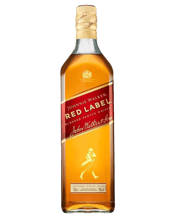
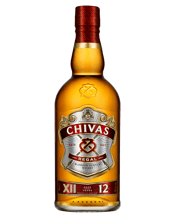
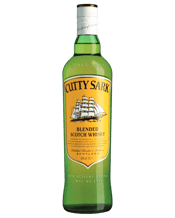
Famous blends (like those of Johnnie Walker, Chivas Regal and Cutty Sark) combine whiskies from any number of distilleries in order to create a particular flavour profile. For instance, Johnnie Walker Red Label boasts a blend of whiskies from up to 35 distilleries (including names like Cardu and Caol Ila) in order to achieve its classic style. This unique approach means that blends can reliably achieve a consistent house style, but there’s also a very broad spectrum of potential flavours and styles to draw from, offering plenty of variation for blenders to play with.
In traditional Scotch whisky blends, you’ll also generally find the addition of grain whisky to the mix. We won’t go too deep here, but grain whisky is distilled differently (in a column still, rather than pot still), can be produced from grains other than barley, and is fairly neutral. The addition is to make a smoother, softer whisky compared to the more flavoursome and rich single malts.
There are certain whisky drinkers who suggest that single malts are for serious drinkers and blends are for the casual sippers. Don’t listen to ’em – it’s not true. Across both styles you’ll find examples that are simple or complex, powerful or soft, rich or light. What sways you should be personal preference for those flavours and styles (and maybe a nice whack of curiosity, too), and mixed drinks that lean into the characteristics of each. Here are a few things to keep in mind.
To drink neat or on the rocks
For blends as well as single malts, you’ll find whiskies worthy of sipping neat or on rocks (that is, straight whisky or served on ice). Exploring the world of single malts with these simple serves – particularly those traditional Scottish drams – can be a great way to understand how different regions produce different styles. For instance, single malts from the Islay region of Scotland tend to be fiery, smoky whiskies, while Lowland malts can be soft and fresh. This is where single malts really shine.
Blends, on the other hand, draw flavours from all parts, giving them a huge range of styles. The addition of grain whisky can certainly make them softer – and this can be a big plus for simple serves if you’re looking for something easy-drinking – but there’s no reason to think blends are less interesting or flavoursome than single malts in general.
To use in cocktails or mixed drinks
You might hear that it’s wrong to use single malt whisky in a cocktail, and there’s a decent reason – particularly if you’re buying a premium single malt, there’s a real chance to lose the subtle flavour characteristics among the other cocktail ingredients. However, if a cocktail calls for a smoky, peaty whisky, then a potent single malt from Islay like Laphroaig is hard to pass up, while Glendfiddich has a green apple note that can work well in fruity drinks. It’s all about context.
Generally speaking, a blended whisky should offer a great balance of flavour and price that lends well to cocktails, so this is a safe bet if mixing is your thing. Classic blended whisky cocktails include the Rob Roy (like a Manhattan but with Scotch instead of American whiskey) and the Rusty Nail (whisky mixed with a sweet liqueur like Drambuie), but you could easily sub in a blend for bourbon in a Whiskey Sour. Honestly, you’ll just have to try it yourself.



%20(1)?$dans-daily-web-image$&hei=900)
?$dans-daily-web-image$&fmt=png-alpha&wid=800)