


Keep the chunks out, the texture tight and the flavour exactly where it should be – in the glass.
We sure do love a deep-dive into the world of cocktails around here. We’ve previously covered the science behind the bartender shake and the whys and hows of stirring, so now we’re delving into straining. It might seem like one of those nice-to-haves in a cocktail recipe, but trust us – this step’s non-negotiable. It’s the difference between a flabby, watered-down Martini and one that’s crisp, clear and on point. Or a Daiquiri that’s basically a glass of pulp versus one that’s clean, zesty and a joy to sip. If you’ve ever had to chew your way through a Sour, you already know what we’re talking about.
So, to help you dodge the classic cocktail blunders that come from leaving the wrong bits in your drinks, consider this your ultimate guide to straining like a seasoned pro.
Sounds like a trick question, but believe it or not, some folks are still scratching their heads. Straining, at its simplest, is just separating the good stuff from the bits you don’t want in your glass. Think fine ice shards, stray mint leaves, citrus pulp – all the usual suspects. It’s a lot like in the food world, where you strain the flavour carriers such as the whole veggies and bones from stock into your new vessel (and not down the sink – yikes).
Once you’ve shaken or stirred your drink, pour it through a strainer and/or fine strainer into your glass, leaving the unwanted bits behind. It may be easy, but it’s absolutely essential, not just for taste but for mouthfeel and presentation, too.
Not to bang on about it, but straining your cocktail is seriously important. Sure, a chunk-free drink looks better, but it also tastes better. Straining gives your cocktail a cleaner texture and a smoother mouthfeel.
It’s also your last line of defence against over-dilution. Take the classic Daiquiri. If you let those bigger ice chips from the shaker slide into your glass, they’ll melt fast and water down the drink. PSA: some ice flecks in your Daiquiri? Totally fine. Preferred, even. But heaps of solid chunks? Nope, hard pass.
But for the best (and possibly most annoying) example of why straining matters, look at the classic Martini. That cocktail takes time – stirring, tasting, getting it just right. Skip the strain and those sneaky ice flecks melt straight into your glass. Just like that, you’ve watered it down and wrecked the whole thing. At that point, you have no choice but to start over, and honestly, that’s bloody frustrating, not to mention a waste.
If you’re not fussed about the odd mint leaf or ice chip in your drink, that’s fair enough. But what about solid, goopy bits of egg white? If your cocktail calls for egg, such as in a Whiskey Sour, Pisco Sour or Ramos Gin Fizz, then double straining is a must. That’s just what it sounds like – use the strainer on your shaker to pour the mix through a fine strainer into the glass. It’s the only way to catch any solidified clumps, weird globs or even big bubbles. Egg whites aren’t just there for fluff – they help aerate and emulsify, giving your drink that silky, pillowy texture. But to get that smooth finish, you need to double strain. The end.

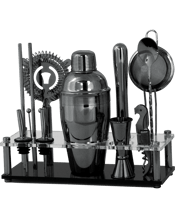
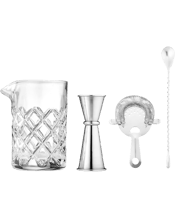
If you’re looking to start your mixology journey with some new gear, here’s what the pros use.
Built-in strainer
Some cocktail shakers come with a strainer built into the lid – like the classic three-piece cobbler shaker. These work in a pinch, but in our humble opinion they just don't work as well as using a separate strainer. If you're serious about making tasty drinks, dig into the options below.
Hawthorn strainer
First up: the Hawthorn strainer is the coiled metal mate (circular with a handle – see the image to the left) that sits snug over your shaker tin. It's your go-to for any cocktail that needs a fast, clean strain – think Daiquiris, Margaritas, Cosmos and the like. The goal? Get it in the glass quick-smart so you can drink it at its absolute coldest and freshest. This goes for almost all cocktails that are shaken hard and fast. Don’t fall into the trap of using a fine strainer for these drinks – you’ll end up losing a lot of the cocktail’s character and very subtle effervescence.
Julep strainer
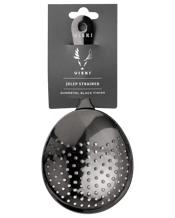
Next up, the Julep strainer is named for, you guessed it, the Mint Julep. This interesting piece of cocktail history predates the straw and it's essentially a round metal paddle with holes in it. The idea was to fit it over your Julep cocktail so you wouldn’t get a gob full of ice or mint. These days, it’s often used for stirred drinks like Martinis and Old Fashioneds. It works much the same as a Hawthorn, but if you're choosing just one strainer as you start out making cocktails, go with the Hawthorn; it’s the easier and more common of the two.
Fine strainer
As the last bit of cocktail kit you need, go with a solid fine strainer (AKA mesh strainer). It looks like a small sieve or tea strainer and is your best mate when chasing that fine, glossy top in drinks like the Ramos Gin Fizz, Whiskey Sour, or ever-popular Espresso Martini. It's also really important when your ingredients include really small bits of debris you don't want landing in the finished drink – think matcha powder, strawberry seeds and the like. Fun fact: Fine straining is just double straining: same thing, different name.
To double- or fine-strain a cocktail, pop your Hawthorn over the shaker, then hold your fine strainer over the glass. Both work together for one job: clean, glossy cocktails. The Hawthorn strains out the bigger bits and ice, while the fine strainer handles the little bits, and, crucially, all those big, sloppy bubbles, too. Think of those sad Espresso Martinis with chunky foam and giant bubbles. Robbed. Fine-strain it for that iconic, glossy crema.
Our hot tip? Tea strainers do the trick, but for full control of your liquid and clean pours, look for a professional conical fine strainer that fits neatly over your glass.
It’s the age-old dilemma: how do you uncook a steak? You can’t. Same goes for cocktails – once you’ve started shaking or stirring without a strainer (or anything resembling one), you’re in damage control. Because even if you decide to pivot halfway through – say, turning your Daiquiri into a Mojito – you still have to deal with that cracked, shardy ice already in the mix. Leave it in and you’ll end up with a watery mess. And trying to fix the measurements after it’s over-diluted is a bit of a nightmare (read more about cocktail faults here). You’re basically looking at re-batching from scratch. Moral of the story: commit early, strain properly and save yourself the headache. That said, sometimes you get mid-mix and realise your strainer’s AWOL (or never existed). Time to MacGyver it.
Sieves? Great. Tea strainers? Even better. Pasta strainers? Absolutely not – if spaghetti can get through, so can everything else. You want a fine mesh; something that catches pulp and shards, but doesn’t clog. For a worst-case scenario, you can use a spoon, knife or tin lid. Risky business, but they should do the job.
If it’s a Margarita, Daiquiri or similar and you’re caught short, you can (carefully) use the shaker lid to hold back the ice. It’s not ideal, but it’ll do in as a last resort.
For stirred drinks, though – usually spirit-forward cocktails that are on the pricier side – don’t risk it. If you’ve already started without sorting your mise en place (ie strainer), just be patient and careful. Use whatever’s on hand, like a big knife, saucer or the back of a spoon. Will it taste as good? Most likely not. But hey, at least it’s not wasted.
When it comes to fine-strained drinks, you might just have to count your losses. If it needs a fine strain and you’ve got nothing but vibes, call it a lesson learned.
And if all of this sounds like too much fuss, there are always other recipes to fall back on like the Ranch Water or those surprisingly great cocktails made from just two ingredients in equal parts. No tools, no stress and drinks you just can’t mess up.





%20(1)?$dans-daily-web-image$&hei=900)
?$dans-daily-web-image$&fmt=png-alpha&wid=800)