

Five facts to pair with your next glass of France's finest.
Look it up! It's in southwestern France, just north of Bordeaux, and you better believe it's fancy. Disney-esque castles dot the banks of the Charente river, as do the vineyards from which the grapes used to make Cognac are picked. It's the only place that a real Cognac can be produced, the same way Champagne can only come from the Champagne region. Within the Cognac region, there are further classifications denoting the quality of a plot's soil, with the highest rating being Grande Champagne, followed by Petite Champagne.
All Cognac must be aged for at least two years and from there, it's sorted into three categories. You'll find 'VS', or 'Very Special', Cognac at the younger end of the spectrum, which means it's been aged for that minimum two years. Next is 'VSOP', or 'Very Superior Old Pale', which will have spent at least four years in barrels, followed by the prestigious 'XO' designation. This stands for 'Extra Old', meaning a Cognac has spent six or more years ageing.
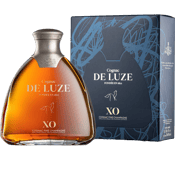
Try it: De Luze XO Fine Champagne Cognac
It takes a lot of effort to make a batch of Cognac. First up, the grapes are fermented, then the resulting wine is distilled twice and left in oak for two years. After that, the mix will be blended with another batch then either bottled or blended yet again. The Cognac blender's main goal is to keep the flavour consistent from year to year, so there's a lot of tinkering throughout the process and experience is priceless.
The flavour of Cognac varies so widely that in 2009, a bunch of experts – distillers, sommeliers, journalists – got together to create the Cognac flavour wheel. There were 50 of them and they each tried 100 different Cognacs, with the 5000 tasting notes being used to create the flavour wheel. What does this mean? For blenders to come up with that same flavour profile – year-in, year-out – is nothing less than a miracle.
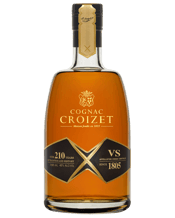
Try it: Croizet VS Cognac
Cognac accounts for just 1% of the global spirit production. It's production also requires a long time in barrels, meaning it naturally loses some of its volume through the process. Simply put, Cognac is pretty rare, which makes it harder to find, more expensive and highly sought after. That's the reason you don't hear much about it – aside from in hip-hop songs, of course – rather than any problems with actual taste.
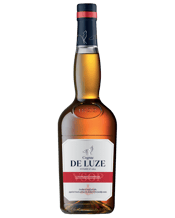
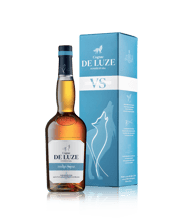
Try it: De Luze VS Cognac
There are more ways to enjoy a Cognac than by simply drinking it neat. It can be a fantastic base spirit for a cocktail and works equally well when paired with freshly shucked oysters or a pungent blue cheese. This versatility comes down to the breadth of Cognac flavours, which can be sorted into four categories: Summer (fruity), Winter (wooded), Spring (floral) and Autumn (spicy). The more common flavours include apricot, cinnamon and vanilla, as well as chocolate and port in older examples. Check out our guide to mixing, sipping and pairing Cognac for the lowdown on what the spirit is truly capable of.
Try it: De Luze VSOP Cognac