One of Dan’s whisky lovers explains why she fell for the spirit, and how you can too.
Hannah is a Customer Experience Manager at our Malvern store in Melbourne, and as part of her role at Dan’s, she runs in-store experiences to take people on an exploration of the world of whisky. It’s something she’s passionate about because the best way to find your whisky, she says, is by ‘being able to taste a bunch of different styles and figuring out what works for you’.
That’s how it happened for Hannah. “I went to an event called Whisky Live,” she says, “which involved walking around tasting all the different types of whisky. I’m also very fortunate to have quite a few friends who are really into whisky, so we do a group thing where we get together every couple of months and everybody brings a different bottle that they like. It means we get a chance to try all kinds of different whiskies.”
Hannah’s newfound love of whisky saw her and her friends travelling to Scotland to taste the uisge beatha, or ‘water of life’, at its source. They booked a house in Speyside, in the country’s north, which is famous for whiskies like the Glenfiddich 12 Y.O. Single Malt and Glenlivet 12 Y.O. Single Malt. “We spent a week attempting to tick off all 20 of the region’s distillery cellar doors,” says Hannah, “and I think we missed three, so we did well. Speyside is definitely my favourite whisky region because it’s very light, very fruity, very approachable and easy-drinking. It’s a really good style to begin with.”
Whisky, and particularly Scottish whisky, or Scotch, is made in five different regions: Campbeltown, Highland, Islay & the Isles, Lowland and Speyside. Much like wine, each region has its own distinct style of whisky, with Speyside leaning towards the lighter, fruitier end of the spectrum, like the Glen Moray 15 Y.O. Single Malt. “Then you go up to the Highlands, which is a little heavier and has more spice characteristics,” says Hannah, “then the islands and Islay, which tend to be heavy, smoky, peaty kind of whiskies. For me, I have to be in a really specific mood to enjoy those.”
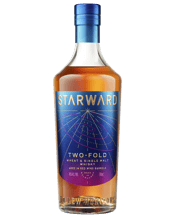
Scotch isn’t the only whisky in town, of course, with Japanese and Australian whisky, like Starward Two-Fold Double Grain, rapidly growing in popularity around the world. “Japanese whisky, tends to be really, really light and a bit grassy, which is probably one of the reasons why it’s so popular. I would say it’s delicate; it’s not fruity, but it’s still quite light and the flavours are really hard to pick because they’re quite subtle. It’s definitely a good place for beginners to start.”
This variation in style is what really appealed to Hannah in the first place. “There are different whiskies for different moods,” she says. “It can be anything from light and fruity to very, very heavy and smoky, like you’re drinking a campfire. I run different whisky classes where we’ll do different styles for beginners, so you try a Japanese whisky, then a Speyside, then a Highland, then a smoky one. We want to figure out which style a customer might like, so I usually start people with the lightest. I tend to find that if they jump in the deep end with all the smoky stuff, they get intimidated and think that they don’t like whisky at all”
It’s these opportunities to try a lot of different styles, and figure out what works for you, that Hannah believes are so crucial to developing a fondness for whisky. While something like the Caol Ila 12 Y.O Single Malt is an incredible smoky whisky, it’s by no means for everyone. Hannah says, “You can try an Islay whisky and think ‘I don’t like that, so I’m not going to look at that region because I don’t enjoy it.’ And then maybe you think, ‘Oh, I like these Speyside whiskies, so I guess Speyside is my style.’ Then you can explore other distilleries from the Speyside region and be confident that you’re going to enjoy them.”
Like anything, finding your whisky is best approached with an open mind. The more you immerse yourself in the world of malts, the more you’ll appreciate the different flavours and styles, as well as the stories and people behind each bottle. And who knows? Perhaps you’ll find yourself hiking through the Scottish countryside one day, searching the depths of a snow-dusted distillery in search of the perfect whisky to warm your soul.