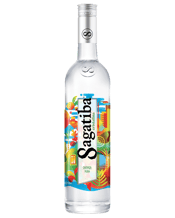
Sometimes the most delicious cocktails don’t need aggressive bartender shakes or loads of funky liqueurs. Sometimes the simplest drinks pack the biggest punch. Here, we’re talking about the humble, easy-to-make but hard-to-say Caipirinha.
A traditional Brazilian drink, the Caipirinha (pronounced kai-pur-een-ya) comprises just three ingredients muddled in a glass: lime, sugar and the Brazilian spirit cachaça. But what is cachaça?
Cachaca is a clear, fermented sugar-cane spirit. Although it’s often referred to as “Brazil’s rum” it doesn’t have that sticky, sweet rum taste. Cachaca has a greener, even spicy flavour to it. It’s big in Brazil, but outside of this South American nation, it’s best known for its role in the Caipirinha cocktail.
There are many origin stories for the Brazilian Caipirinha, but let’s focus on the two biggest. Born in the countryside of Sao Paulo state in the 19th century, it was historically used (with the addition of honey and garlic) as a medicinal drink to lessen the severity of the Spanish flu. Over time, it migrated to the port of Santos, which is where it was first called a Caipirinha. The second theory is that the drink, which is full of citrus, was created to ward off scurvy. Of course, the drink isn’t medicinal, and that’s not why we love it. We love it because it’s delicious and it’s so easy to make.