NOW EXPERIENCING:The evolution of Australian craft beer
Learn|Beer|Craft Beer|Interview

The evolution of Australian craft beer


Read time 3 Mins

Posted 01 Apr 2022

By
Mitch Parker


Jeremy Halse, Head Brewer at White Rabbit, tells us how the Aussie craft beer scene has changed.

When it comes to Australian craft beer, Jeremy Halse has seen it all. He's worked at pioneer brewery White Rabbit since 2009 and was on the tools at Matilda Bay Brewery before that, overseeing some of the country's favourite beers over the years. We sat down with him to chat about those early pioneers and see if, and how, things have changed in the decade since craft beer started taking off in Australia. Here's what he had to say.
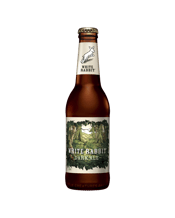
How did craft beer fit into Australia's beer landscape when you started at White Rabbit?"From memory, craft was really starting to hit its straps when I started at Rabbit in 2009. It still wasn't huge and you had people who would refer to it as 'one of those boutique-y breweries or whatever.' It's interesting, in terms of awareness, that when I first started with White Rabbit I would say it was part of Little Creatures and the response would be something like, 'Oh yeah, I've heard of Creatures, cool,' but a couple of years later I'd say White Rabbit and people would instantly start talking about our dark ale and how it was their favourite dark beer. Little Creatures, James Squire, Matilda Bay and the pioneers like Mountain Goat and Feral Brewing were known back then, but craft really started to kick off through 2010 and 2011."
Why do you think craft beer became so popular when it did? "Good question. I feel like with craft beer, among other things, there was just a general move towards understanding what you're consuming. It's all just part of that. What people were eating, what they were drinking; there was a slow shift towards more flavour and a more considered approach to consumption. It had been bubbling away before, like with Matilda Bay in 1983, when there was an explosion of interest but nothing really came from it. I think people thought that this would be a bubble again, but it just kept growing, so I don't know if it was craft beer in isolation. I think it was probably part of a bigger movement."
Have there been any game-changing moments for craft brewers?"Honestly, there's nothing that instantly sticks out for me. Maybe it was the rise of social media, which helped the movement along and gave exposure to smaller brands that perhaps might've struggled in the past. It's just that groundswell. It sort of looks like an explosion, but there was a groundswell that kept growing and growing throughout the decade. For a few years, we were so flat out at White Rabbit that I hardly came up for air."
What have the trends been in regards to craft styles?

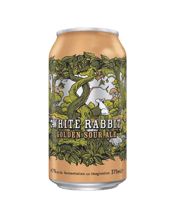
"I'd say it's XPAs and Pacific Ales that have really taken off and they're continuing to grow. People are also trying interesting things with Hazy and Brut IPAs and it looks like Hazy is here to stay. More recently, there's been a move to sours and barrel-aged beers, which is more what we [White Rabbit] have been focusing on, rather than hop-driven craft beer styles.

Sours are said to be the next big thing because they're diverse and you can do so much with them. They're incredibly exciting for those that are into them, but I think they'll remain fairly niche. Personally, I love brewing slow-paced sours in barrels with wild cultures because they're fascinating to watch as they evolve. At White Rabbit, we do a lot of the quick sour stuff too, which is great and a nice entry to the style."

Do you have any crystal-ball predictions for the next big thing?

"At White Rabbit, we're open to trying everything and I don't particularly like having rules and sticking to this or that, or hearing that you've got to brew a certain way. I think we can play with pretty much any style and put our own spin on it. I'm always challenging our brewers to think outside the box and put themselves in the shoes of the pioneers, like Little Creatures using whole hop cones in the early days, or White Rabbit with the open fermenters, which nobody in Australia had done at that scale. 

There have been so many entrepreneurs over the years and now anyone can jump on the internet and see what the next big thing coming out of the US is. We could try to quickly emulate it, but looking into the future, I think we're most interested in how to use the ingredients in really smart and interesting ways. That innovation is what craft beer is all about."