

.jpg/jcr:content/renditions/cq5dam.web.1280.1280.jpeg)
Don’t know an APA from an IPA? Here’s what all those brew styles mean.
Ales and lagers (AKA beer) are pretty easy to understand until all actual words go AWOL and acronyms start getting involved, IMO. Because, honestly, there’s nothing worse than beer-term confusion giving us FOMO when all we want is a delicious beer ASAP. It’s all a bit WTF, tbh.
Okay, enough of that – you get the idea. But beers are supposed to be the beverage of the people. With so many styles out there referred to by their acronym, it can be hard to know what you’re drinking. That’s why we’ve taken the opportunity to decipher the beer alphabet and those tough terms. Now you’ll finally know what’s actually in that can of DDH DIPA.
What it stands for: American pale ale
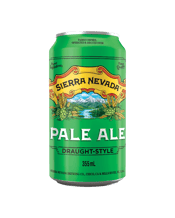
What it means: American pale ales are the craft beer. Long before hoppy ales were everywhere, trailblazing beers like Sierra Nevada Pale Ale started cropping up with a unique style that was malty and rich but mostly focused on American hops. See, where European hops are traditionally bitter and herbal, American pale ales harness the sort of highly aromatic, fruity, extra-flavoursome hops that (back then, at least) only came from the US.
And thus, the APA was born, eventually spreading to the rest of the beer-loving world. In fact, the APA is so ubiquitous now that basically every beer you see that’s labelled as a ‘pale ale’ is actually an American pale ale. So, keep that in mind when you’re browsing the range in-store.
What it stands for: India pale ale
What it means: Few beers have an origin story like the IPA. As the story goes, with plenty of English people in India in the 18th and 19th centuries, they had a hankering for good beer from back home. But beer didn’t do too well on the long sea journeys, so pale ales were fortified with extra hops because they are a preservative as well as a flavouring.
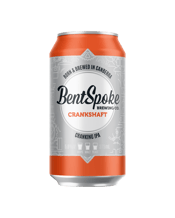
That original style came to be known as an IPA, but would today be called an English IPA. These days, IPAs are essentially APAs that are stronger in both malt and hops – and that means those fruity, floral, flavoursome New World hops. IPAs also tend to be quite bitter, and they’re usually stronger in alcohol than APAs, which explains why a modern classic like the Bentspoke Crankshaft IPA is a hefty 5.8% ABV.
What it stands for: Extra pale ale
What it means: It’s a bit tricky to say that ‘X’ stands for ‘Extra’ but we suspect the Environmental Protection Authority already has the rights to EPA (plus, the ‘X’ makes it sound cool).
So, what is an XPA, then? Well, it’s actually not all that well defined. The BJCP, which hosts a comprehensive list of beer styles for the use of beer judges, doesn’t even list XPA as a style. Some consider it between an American pale ale and an IPA (hoppier than an APA, less hoppy than an IPA) but others – like Balter’s former brewer Scotty Hargrave – think that it’s an extra-pale ale. That is, a hoppy ale with a drier, less malty base to it.
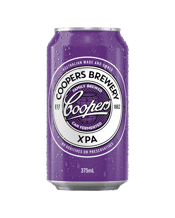
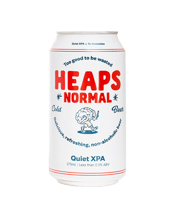
However it’s defined, aromatic hops always stand out in an XPA – as in the light tropical fruit notes in Coopers XPA. And those hops are one of the big reasons Heaps Normal XPA has been such a big winner in the non-alc world, too.
What it stands for: New England India Pale Ale
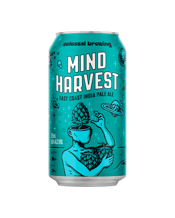
What it means: If we told you that the NEIPA is another name for a hazy IPA, that should give you a clue as to what’s going on here. NEIPAs are IPAs in the sense that they’re super hoppy beers, but they’re quite different from the classic style. Rather than focusing on bitterness and maltiness, NEIPAs like Colossal Brewing Mind Harvest are intensely ‘juicy’, with an almost sweet hop style, thick mouthfeel, low bitterness and a classic opaque haze. This style gets compared to fruit juice and we can see why.
Oh, and the reason it’s called a New England IPA is because the style first started to get popular in the New England area of the US, thanks to breweries like Alchemist and their Heady Topper beer.
What it stands for: Double India Pale Ale/Triple India Pale Ale
What it means: We love when things get a little over the top, and that’s exactly what happened with DIPAs and TIPAs. When the potent bitterness and nose-punching hop aromas of regular IPAs weren’t enough, breweries started to go harder. This generally meant adding a truckload more hops to boost flavour, and upping the malt, too, to keep things relatively balanced. As a result, alcohol concentration goes way up in DIPAs and TIPAs – well into the double digits in some cases.
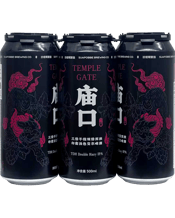
Strictly speaking, there’s no real definition of what makes a ‘double’ or ‘triple’ IPA – they’re just stronger. And because they’re such full-flavoured, hop-filled titans, DIPAs and TIPAs aren’t always super common (you probably won’t find one at your classic pubs). They are worth seeking out, though, and versions like Suapobbe Temple Gate TDH Double Hazy IPA are well worth ordering via Dan’s Marketplace.



%20(1)?$dans-daily-web-image$&hei=900)
?$dans-daily-web-image$&fmt=png-alpha&wid=800)