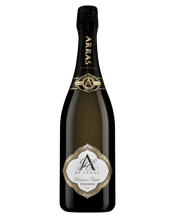
Forget Champagne – Tasmania is here to play and Wine Merchant Chris is here to prove it.
Though Champagne has long been the benchmark of sparkling wines, it's sometimes the region's reputation, more than its wines, that does the heavy lifting. No offence to France – Australia remains one of the largest Champagne markets in the world, importing millions of bottles of the stuff every year – but we're finally becoming more aware of the sparkling treasures that can be found just south of the mainland. And the exciting thing is, Tasmania's winemakers aren't just competing with the traditional French powerhouses; in many ways, they're blowing them right out of the sparkling water.
“Tasmania has a similar climate to Champagne, without the intense climatic changes,” says Chris Gollogly, a Dan Murphy’s Wine Merchant based in Hobart. “We still have the cool weather, and the wet, but not those massive hail storms or big frosts.” It’s for this reason exactly that iconic Champagne houses like Louis Roederer recognise Tasmania as the perfect place to replicate what the French do so well. Back in 1985, the famed French producer partnered with Heemskerk Wines to plant chardonnay and pinot noir (Champagne’s base grapes) in Tasmania. And in the 26 years since, Tasmania’s sparkling scene has gone from strength to strength.
"The majority of sparkling wine in Tasmania is actually made in Tasmania by the people who grow and press the grapes," says Chris. This is worth noting because it speaks to the exceptionally high quality of wine coming out of the state. You can draw a parallel with Champagne, where many of the big Champagne houses will purchase their grapes from growers and concentrate on making the wine, whereas those that take responsibility for the whole process – from vine to bottle – produce what's known as 'grower Champagne'. This is highly sought after because of its superior quality, and in Tasmania, they're making the Australian equivalent of 'grower Champagne' and more than holding their own.
"We wax lyrical in the wine world about grower Champagne, but for the people of Tasmania, this is their thing," says Chris. "They're growing the grapes, pressing the grapes, disgorging the bottles, and pouring their wines at the cellar door. Everything is super passionate, super local and the wineries really do play nice as an industry. Everyone is very supportive, to the point that if there is a challenging vintage, they'll share grapes to help each other through. It's an Australian thing, but it's also because they're doing things off their own back, so they share techniques, styles and thoughts, which I think is pretty special."
As for how Tassie sparkling stacks up against Champagne? "The Tamar Valley is an ideal spot for growing sparkling grapes," says Chris. "We're close to waterways, which makes it easier to look after the vineyards and grapes, and it's quite warm too, while still being cool enough for the grapes to achieve full ripeness. It means we end up with wines that are similar in style to a classic French Champagne."
One of the distinguishing features of Tassie sparkling, according to Chris, is that "You can actually taste the red apples. I know we joke about Tasmania being the Apple Isle, but you get red apples and high citrus along with those toasty notes. There's a heavier flavour profile and it becomes quite full-bodied, dense and mouth-filling, whereas Champagne is made to be crisp and mouth-watering. While Champagne is often served as an aperitif, I'd serve a glass of full-flavoured Tassie sparkling with something like a steak, because it has the depth of flavour to take on a heavier dish."

It's not just Tasmania's wine that's legendary either; the characters that make up the industry deserve just as much recognition. A great example is Josef Chromy, who has been instrumental in the development of several well-known wineries. And though he launched his namesake, Josef Chromy Wines, in 2007 at the age of 76, he can still be seen visiting the winery every day.
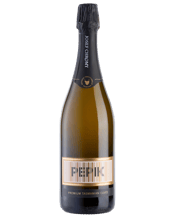
"The winery is held in extremely high regard with the locals because Jo still lives here and is still very proactive," says Chris. "He's got a fascinating story, and the locals always want their wines to be as local as possible. They'll be receptive if the fruit is from Tasmania and the wine is made on the mainland, but they'll prefer everything to be done locally. Josef Chromy's cellar door is one of the most celebrated and visited in the state, by the locals in particular, and his wines are known for being premium and held in the highest regard." Their Pepik Cuvee NV is a perfect example.
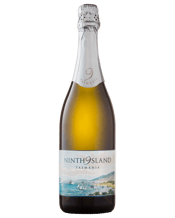
The cellar door at Pipers Brook is another local favourite, and somewhere everyone should visit when they're in Tasmania. (Or play along at home with a bottle of Ninth Island Sparkling NV.) "The feel of the cellar door is exceptional and you can tell that it's very local," says Chris. "There's a farm-to-table attitude, and the people there love showing off their wines."
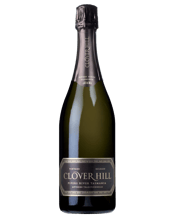
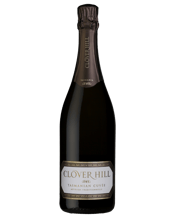
The same can be said of Clover Hill, which is right by the River Tamar. "If you want to talk about depth of flavour, they do it best," says Chris. "I'd put their NV sparkling – the house style – next to most vintage Champagnes and say, 'Try this instead.' If I had the bottle cloaked, people would honestly think it's a high-end Champagne. It's just a cracking house sparkling, and they achieve such pristine fruit and depth of flavour. It's remarkable."