NOW EXPERIENCING:So you want to start drinking mezcal? Read this
Learn|Agave|Spirits|Mezcal

So you want to start drinking mezcal? Read this


Read time 4 Mins

Posted 16 Mar 2023

By
Emily Reed


It’s time for this agave spirit to step out of tequila’s shadow and into the limelight (and your cocktails).

Ever spied a bottle of mezcal at your local bottle-o or bar and thought ‘what actually is mezcal and how (and where) in the world is it made?’ Us too. Mezcal is a little like the Nicky Hilton of agave spirits: its better-known sibling Paris Hilton (tequila) is more widely acknowledged, however, there’s plenty to love about the lesser-known member of the agave family. A staple of Mexican bar culture, mezcal has been gaining popularity in Australia, but there are still some questions about what it is and how it differs from tequila, which we’re here to help answer alongside some top bottle reccos to get you started on your mezcal journey.   
What is mezcal?Mezcal comes from the Nahuatl word mezcalli, which translates to “cooked agave” and refers to any agave distillate. It generally has a smoky flavour due to the way it’s made (more on that in a moment).
How does mezcal differ from tequila?

Think of it like this: mezcal is a vast category of spirits made from agave, and tequila is a small subset of mezcal, similar to how bourbon is a kind of whiskey, or chardonnay is a kind of wine. Mezcal can legally be produced in 10 different states of Mexico, though it’s most commonly associated with the Oaxaca region. Tequila, meanwhile, can only be made in five of those states. 

All types of mezcal are made using varieties of the agave plant, but while tequila can only be produced using Blue Weber agave, mezcal can be made from around 40 different species (there are close to 200 in total). By far the most common variety used for mezcal is agave espadin, making up around 90% of the category. But there are plenty of other styles to try, each of which lends its own flavour profile.

The other key difference is that mezcal has remained closer to its origins as a drink of villagers and artisan producers, made in a very traditional way. It’s worth noting, though, that many tequilas are still produced using traditional methods, but it has certainly become more commercialised than mezcal.

How is mezcal made?

The traditional production of mezcal can only be described as artisanal. Many makers still produce it entirely by hand, and even larger-scale productions still involve traditional methods. There are three legally defined categories of mezcal production: industrial, artisanal and ancestral. Industrial refers to a more modern process undertaken by plant managers on a large scale using autoclaves, roller mills and large stills. Artisanal takes it back to the traditional techniques, where maestros mezcaleros (the experts in charge of distilling the spirit) produce quality mezcal for the international market. Ancestral mezcal is made from wild agave using only underground ovens, natural fermentation and small clay stills. This type of mezcal tends to be above 45% ABV, and is often only created for local consumption. 

Making mezcal is seriously labour-intensive. It starts with harvesting the heart of the agave plant (known as the piña), which can weigh up to 135 kilos. These are then slow-roasted to release the natural sugars, most commonly in underground pit ovens, lined with rocks and covered with leaves, dirt and cloth to seal in the heat. 

From there, the cooked piñas are crushed before being combined with water and yeast. In traditional production, the crushing might be done by hand using wooden mallets, or using something called a tahona – a stone wheel pulled by a horse or donkey (or in modern times, a tractor). Then it’s on to fermentation station as the liquid is left to sit in tanks for anywhere from a few days to a week – however long it takes for the sugars to turn into alcohol and develop complex flavours. From here, the liquid is run through a still (at least twice) to refine it into a drinkable spirit.

As we said, there are industrial mezcal producers, but most mezcals are still made in rural areas by Mexican families who don’t have access to expensive machinery – so they create their own. From a simple hole-in-the ground oven to portable rawhide fermentation tanks, the passing down of processes between generations, and the creative ways they fabricate their own equipment leads to something pretty damn delicious. 

Click image to shop

1. The one with all the awards

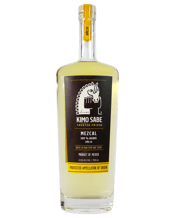
Kimo Sabe’s mission is simple: to create a modern style of mezcal that swaps the rustic history for a more modern, approachable spirit – one that uses modern techniques like a third distillation. They do this in the name of knocking tequila off the top spot for most popular agave. Their Kimo Sabe Añejo Mezcal ages for roughly 18 months in used American oak barrels. Not only is this mezcal ecologically friendly and sustainable, but it’s also the most awarded mezcal of its time. Gold in colour, peppery on the nose and with a backdrop of vanilla custard and baked honey, it doesn’t have the smoky or earthy tones typical of mezcal, but stills offers a rich, rounded palate and a touch of the plant's telltale spice.

2. The organic one

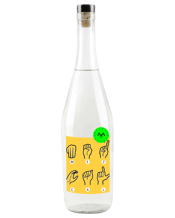
And the award for one of the coolest labels we’ve seen goes to… Mezcal Verde Momento Organic. Fun fact: there are multiple bottle artworks for this one. Each batch features a unique label design by a contemporary Mexican artist, and the collaboration is aimed at supporting the local culture of the mezcal-producing regions, from farmers to distillers. As for the process and taste, this mezcal is made with eight-year-old agave espadin by mezcalero Doroteo Garcia in Tlacolula, Oaxaca (a ‘mezcalero’ is someone who distills mezcal, by the way). The agaves are cooked in an underground oven using ocote (a type of pine tree), holm oak and pepper tree, which give the mezcal a tantalising smokiness – perfect for that Tommy’s Margarita you’re about to make. Enjoy notes of grass, soft smoke and fresh peach as you sip on this. It’s complex, earthy, spicy – and yes, totally organic.

Click image to shop

Click image to shop

3. The small-batch mezcal

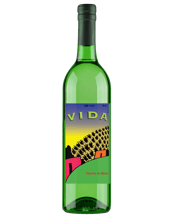
Del Maguey Vida Mezcal is the brainchild of an American artist who uses traditional methods to recreate the artisanal mezcal historically crafted in the state of Oaxaca. Each expression comes from a single village – less than 1,000 bottles across the range are created in a single year. Del Maguey hand craft this mezcal, distilling it twice in small wood-fired riverside copper stills to flavour specifications that underscore its versatility and unexpectedness in cocktails. Expect a nose of fruit aromatics, a hint of honey, vanilla and roast agave; the palate offers ginger, cinnamon, burnt sandalwood, banana and tangerine – it’s smoky, deep, warm and downright delicious.

4. The crisp, herbaceous one

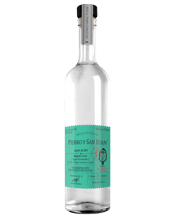
As the name suggests, Perro De San Juan Cirial Mezcal is made from a variety of agave called ‘cirial’ (a sub-variety of the wild agave karwinskii species). Unlike most agave plants, cirial looks more like a mini palm tree, something this bottle nods to with the label illustration. Perro De San Juan, a proudly 100% Mexican company, leaves these precious plants to age for 12 years in the field before harvesting them at the perfect time for the ultimate balance of flavour. Think lemongrass, melon, peppery citrus, and apple, with an ultra smooth, crisp finish. Produced by mezcalero families with more than four generations of experience, this mezcal is made in the traditional, artisanal way in San Dionisio Ocotepec (around 65km from the city of Oaxaca).

Click image to shop

Click image to shop

5. The one to get you into mezcal

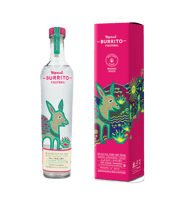
Burrito Fiestero’s Cenizo Mezcal hails from the mountainous state of Durango. They use sustainably grown cenizo agave and champion agave reforestation with their One For One campaign, planting one cenizo plant for every bottle produced – essentially 10 times more than what they use. This sip is distinctly fruity and soft, with a gentle smokiness that leaves a roundness filling the palate – it’s a well-balanced, smooth mezcal that’s the perfect introduction to those new to the drink. We’re pretty big fans of the cute green donkey on the label, too. 
image credits: Charlie Hawks (photography), Bridget Wald (styling).