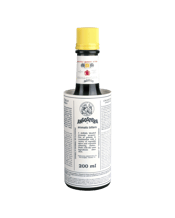
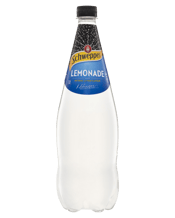
Picture this: you’re 13, you’ve gone with your family for parma night at the local, and the waitress has come over to take your drinks orders. It’s a Classic Shandy for mum, then the waitress turns to you – “What’ll it be, love?” she asks, notepad in hand. There’s one option and one option only: “A Lemon, Lime and Bitters, thanks!” And no matter what age you are now, we can guarantee that it still goes down just as smooth.
Although the VB or flat white come close, there’s almost no drink quite as iconically true-blue as the humble LLB. It’s one of our most-ordered beverages and was birthed right here on Aussie soil (you can file that away alongside the Hills Hoist and Wi-Fi as the country’s greatest inventions).
The drink is so popular hee that, according to the ABC, more than 100 million LLBs are mixed up every year. According to our crude calculations, that’s enough to fill at least eight Olympic-sized swimming pools. Yet, if you ask for one in most countries outside of Australia or New Zealand, they’ll have no clue what you’re on about.
So, how did those Aussie legends come up with such a fine drink all those years ago? Glad you asked. If we take a look back through the history books, you’ll see that the origin of Lemon, Lime and Bitters has more to do with the rise of Angostura Bitters. Back in the 1840s, British sailors used it to treat seasickness and would add it to their gin to make “pink gin”.
And, of course, because they were “sailors” (read: colonisers), Angostura and its popularity spread to the “colonies” where they mixed it with whatever they had handy. For example, in Nigeria, they mixed it with orange juice, grenadine, lemonade and bitters to make a Chapman, and in Hong Kong they added it to ginger ale and ginger beer with lemon to make a Gunner. Here on our shores, we threw in lime cordial and lemonade and called it a day.